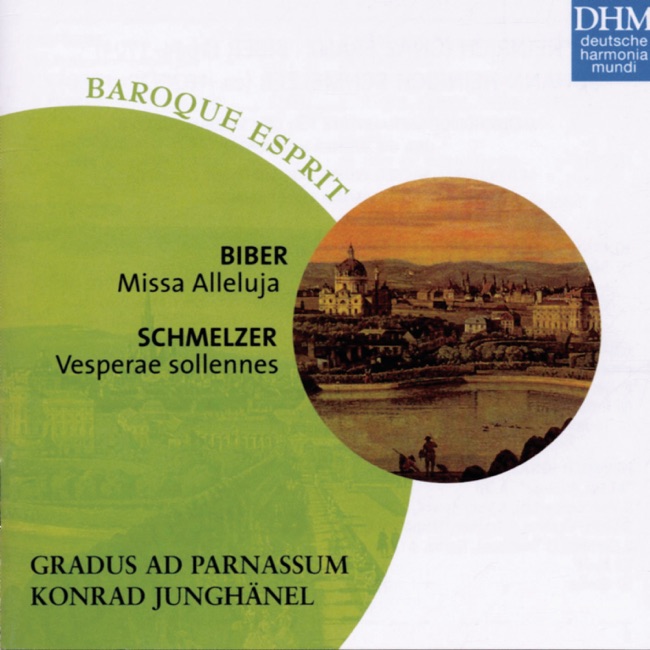
Johann Heinrich Schmelzer
Confitebor, solemn vesper
Released Album
Recent Album
Works Info
Composer:Johann Heinrich SchmelzerGenre:ChoralStyle:ChoralAverage_duration:4:22Johann Heinrich Schmelzer was a prominent Austrian composer and violinist of the Baroque era. He was born in Scheibbs, Lower Austria, in 1620 and died in Prague in 1680. Schmelzer was a prolific composer, and his works include sonatas, balletti, and sacred music. One of his most famous works is the "Confitebor, solemn vesper," a sacred vocal work that was composed in the mid-17th century. The "Confitebor, solemn vesper" is a setting of Psalm 111, which is a hymn of praise to God. The work is scored for solo voices, choir, and orchestra, and it is divided into several movements. The premiere of the work is not known, but it was likely performed in a church or cathedral in Vienna, where Schmelzer was employed as a court musician. The first movement of the "Confitebor, solemn vesper" is a grand opening chorus that sets the tone for the entire work. The choir sings the text of the psalm, while the orchestra provides a rich and vibrant accompaniment. The second movement is a solo aria for alto, which is a reflection on the greatness of God. The third movement is a duet for soprano and bass, which is a prayer for God's mercy and forgiveness. The fourth movement is a solo aria for tenor, which is a meditation on the goodness of God. The fifth movement is a duet for alto and tenor, which is a celebration of God's power and majesty. The sixth movement is a solo aria for bass, which is a plea for God's protection and guidance. The final movement is a grand chorus that brings the work to a triumphant conclusion. The "Confitebor, solemn vesper" is a masterpiece of Baroque sacred music. It showcases Schmelzer's skill as a composer and his ability to create music that is both beautiful and spiritually uplifting. The work is characterized by its rich harmonies, intricate counterpoint, and expressive melodies. It is a testament to Schmelzer's faith and his devotion to the Catholic Church, which was the dominant religion in Austria during his lifetime.More....
Works Music
Released Music