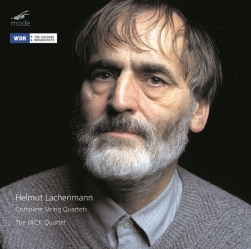
Helmut Lachenmann
String Quartet No. 2 "Reigen seliger Geister"
Released Album
Recent Album
Featured Album
Works Info
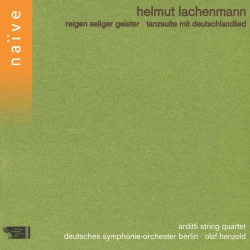
Composer:Helmut LachenmannGenre:ChamberStyle:QuartetCompose Date:1989Average_duration:28:33Helmut Lachenmann's String Quartet No. 2 Reigen seliger Geister was composed in 1989 and premiered on October 22, 1991, by the Arditti Quartet in Frankfurt, Germany. The piece is divided into five movements, each with its own unique character and musical language. The first movement, "Allegro sostenuto," begins with a series of soft, sustained notes that gradually build in intensity. The quartet then launches into a frenzied, virtuosic section that features complex rhythms and intricate interplay between the instruments. The movement ends with a return to the opening material, but with a more subdued and introspective character. The second movement, "Adagio," is a hauntingly beautiful meditation on sound and silence. The quartet explores a range of extended techniques, including harmonics, sul ponticello, and col legno, to create a delicate, ethereal atmosphere. The third movement, "Vivace," is a playful and energetic scherzo that features rapid-fire pizzicato and staccato passages. The quartet also incorporates a variety of percussive effects, such as tapping and knocking on the instruments, to create a lively and rhythmic texture. The fourth movement, "Lento," is a slow and introspective meditation on the nature of sound. The quartet explores a range of extended techniques, including microtonal glissandi and multiphonics, to create a rich and complex sonic landscape. The final movement, "Allegro," is a virtuosic tour-de-force that showcases the technical prowess of the Arditti Quartet. The quartet navigates a series of complex rhythms and intricate interplay between the instruments, building to a frenzied climax before coming to a sudden and unexpected stop. Overall, Lachenmann's String Quartet No. 2 Reigen seliger Geister is a challenging and innovative work that pushes the boundaries of traditional string quartet writing. The piece is characterized by its use of extended techniques, complex rhythms, and intricate interplay between the instruments, as well as its exploration of the nature of sound and silence.More....
Works Music
Released Music
Featured Music