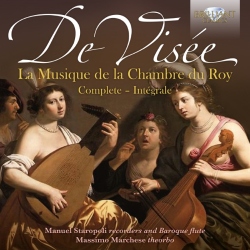
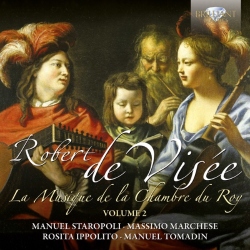
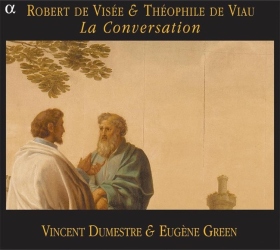
Robert de Visée
Chaconne for theorbo
Released Album
Recent Album
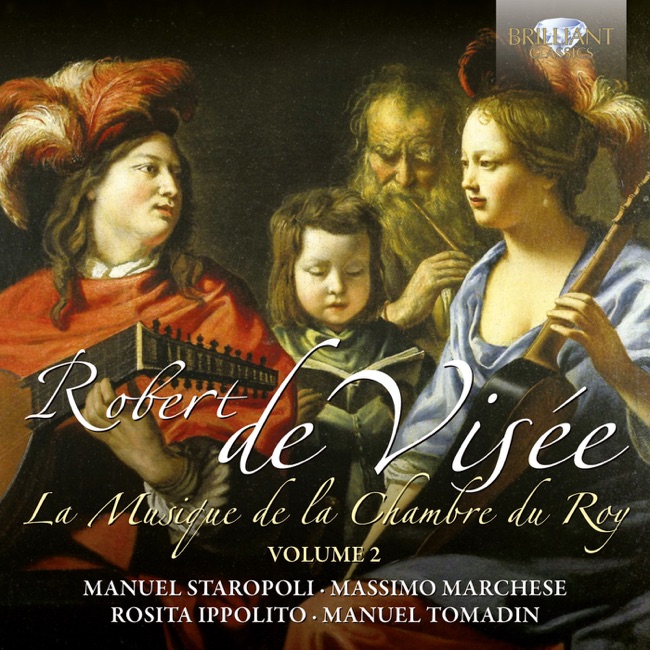

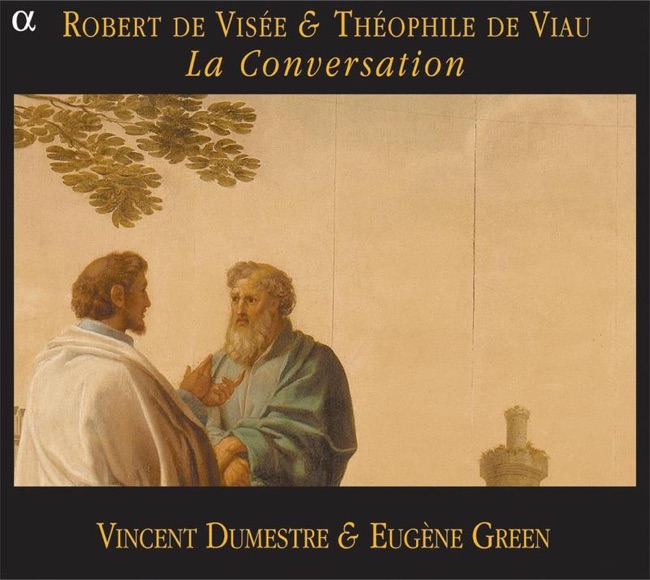
Works Info
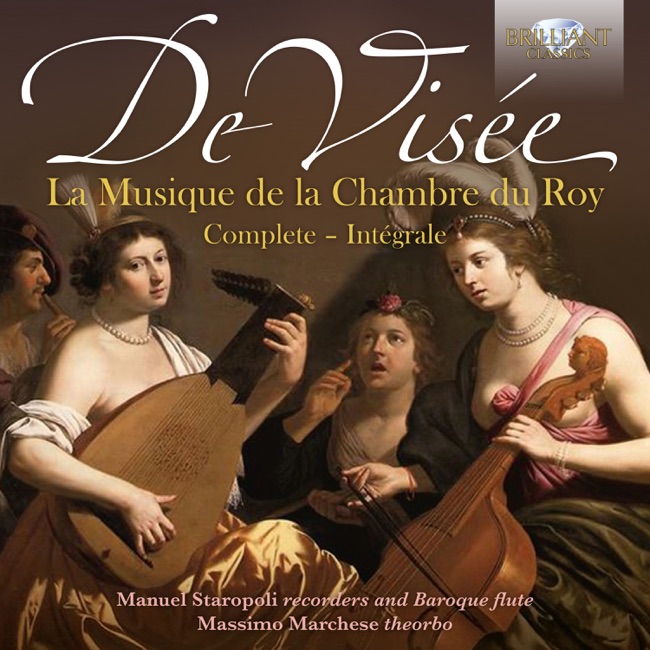
Composer:Robert de ViséeGenre:ChamberStyle:ChaconneAverage_duration:2:40Robert de Visée was a French composer, lutenist, and theorbo player who lived from 1655 to 1732. He was a prominent figure in the French Baroque music scene and served as a court musician for King Louis XIV. One of his most famous works is the Chaconne for theorbo, which he composed in the late 17th century. The Chaconne for theorbo is a solo instrumental piece that was originally written for the theorbo, a large lute-like instrument with an extended neck and a deep, resonant sound. The piece is in the key of D minor and is composed in the chaconne form, which is a type of musical composition that features a repeating harmonic progression over which variations are played. The Chaconne for theorbo is divided into several movements, each of which features a different variation on the chaconne theme. The first movement is a slow and mournful introduction that sets the tone for the piece. The second movement is a lively and energetic variation that features fast fingerwork and intricate ornamentation. The third movement is a more subdued and introspective variation that explores the darker, more melancholic aspects of the chaconne theme. The fourth movement is a virtuosic display of technical skill, featuring rapid arpeggios and complex chord progressions. The final movement is a triumphant and celebratory variation that brings the piece to a rousing conclusion. The Chaconne for theorbo is characterized by its rich, complex harmonies, intricate ornamentation, and virtuosic technical demands. It is a challenging piece to play, requiring a high level of skill and dexterity on the part of the performer. Despite its technical demands, however, the Chaconne for theorbo is also a deeply expressive and emotional work, showcasing de Visée's mastery of the chaconne form and his ability to convey a wide range of moods and emotions through his music. The Chaconne for theorbo premiered in the late 17th century, likely in the court of King Louis XIV. It has since become one of de Visée's most famous works and is still performed and recorded by lutenists and guitarists today.More....