Antonio Lotti
Miserere in G
Released Album
Recent Album
Works Info
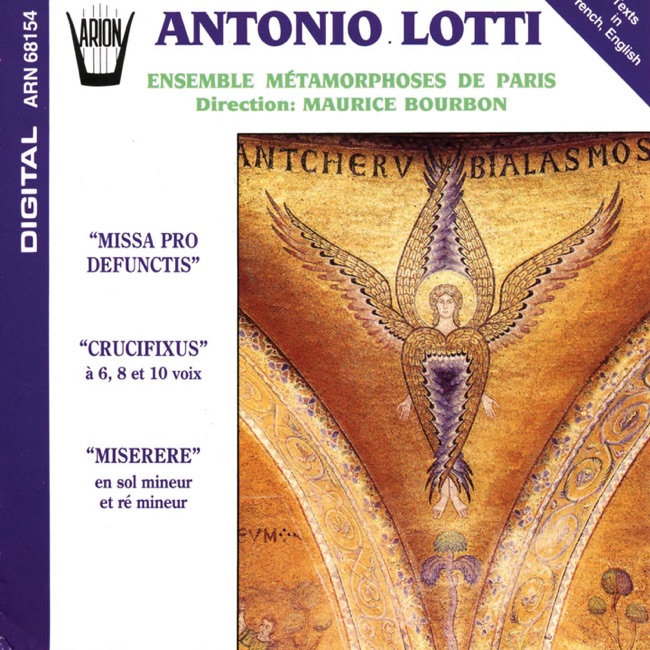
Composer:Antonio LottiGenre:ChoralStyle:ChoralCompose Date:1733Average_duration:12:51Antonio Lotti's Miserere in G is a choral work that was composed in the Baroque era. It was first performed in the early 18th century, and it has since become one of Lotti's most famous compositions. The Miserere in G is a sacred work that is typically performed during Holy Week, and it is often used as a part of the Tenebrae service. The Miserere in G is composed of six movements, each of which is based on a different section of the Latin text of Psalm 51. The first movement is a setting of the opening verse of the psalm, which begins with the words "Miserere mei, Deus" (Have mercy on me, O God). This movement is characterized by its slow, mournful melody and its use of polyphony, which creates a rich, complex texture. The second movement is a setting of the second verse of the psalm, which begins with the words "Tibi soli peccavi" (Against you alone have I sinned). This movement is more upbeat than the first, with a faster tempo and a more lively melody. It also features a solo soprano voice, which adds a sense of intimacy and vulnerability to the piece. The third movement is a setting of the third verse of the psalm, which begins with the words "Asperges me" (Cleanse me). This movement is characterized by its use of antiphonal singing, with the choir divided into two groups that sing back and forth to each other. This creates a sense of dialogue and contrast between the different sections of the choir. The fourth movement is a setting of the fourth verse of the psalm, which begins with the words "Auditui meo dabis gaudium" (You will give me joy in my hearing). This movement is more contemplative than the previous ones, with a slower tempo and a more introspective melody. It also features a solo alto voice, which adds a sense of depth and richness to the piece. The fifth movement is a setting of the fifth verse of the psalm, which begins with the words "Cor mundum crea in me" (Create in me a clean heart). This movement is characterized by its use of homophonic singing, with all the voices singing together in unison. This creates a sense of unity and harmony within the choir. The final movement is a setting of the closing verse of the psalm, which begins with the words "Domine, labia mea aperies" (Lord, open my lips). This movement is the most joyful and celebratory of the six, with a faster tempo and a more exuberant melody. It also features a solo tenor voice, which adds a sense of triumph and victory to the piece. Overall, the Miserere in G is a powerful and moving work that showcases Lotti's skill as a composer. Its use of polyphony, antiphonal singing, and homophonic singing creates a rich and complex texture that is both beautiful and emotionally resonant. Its six movements take the listener on a journey through the different stages of repentance and redemption, culminating in a joyful celebration of God's mercy and grace.More....