Alexander Sergeyevich Dargomizhsky
Esmerelda
Released Album
Recent Album

Works Info
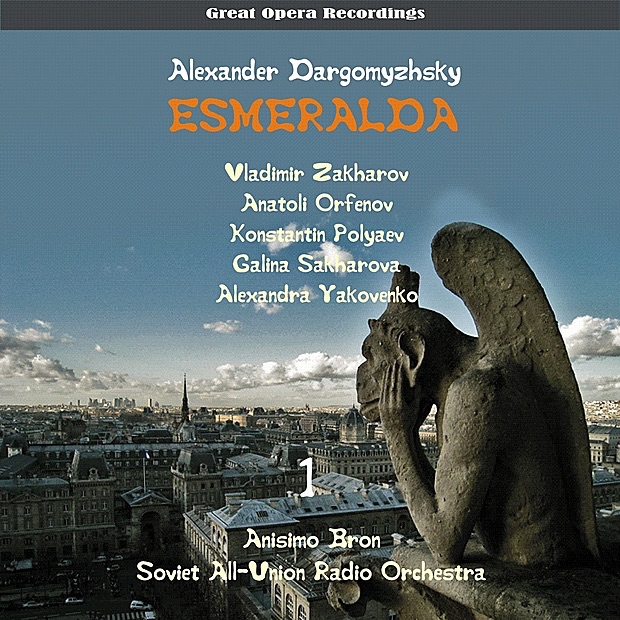
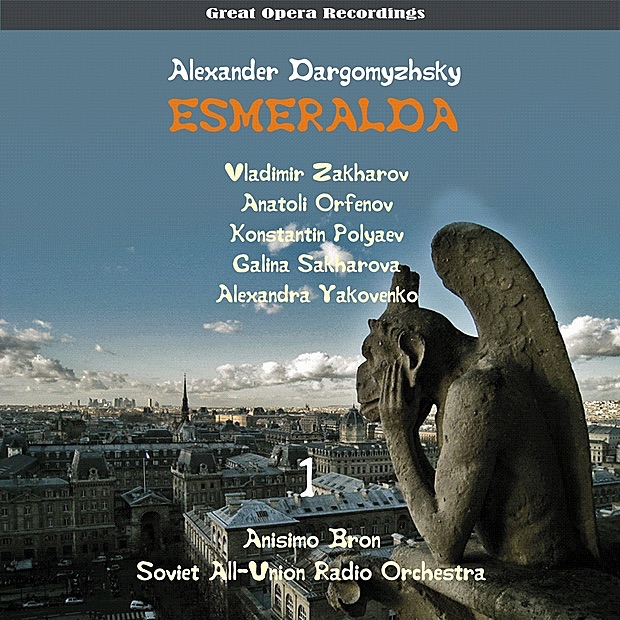
Composer:Alexander Sergeyevich DargomizhskyGenre:OperaStyle:OperaCompose Date:1847"Esmeralda" is an opera composed by Alexander Sergeyevich Dargomizhsky, based on Victor Hugo's novel "The Hunchback of Notre Dame." The opera was composed between 1847 and 1851, and premiered on December 14, 1847, at the Bolshoi Theatre in St. Petersburg, Russia. The opera is divided into four acts and tells the story of the beautiful gypsy girl Esmeralda, who is loved by the hunchback Quasimodo and the captain of the guard Phoebus. However, Esmeralda only has eyes for Phoebus, which leads to jealousy and tragedy. The first act takes place in the square in front of Notre Dame Cathedral, where Esmeralda dances for the crowd. Quasimodo, who is in love with her, watches from afar. Phoebus, the captain of the guard, arrives and is immediately smitten with Esmeralda. However, Frollo, the archdeacon of Notre Dame, is also in love with Esmeralda and becomes jealous of Phoebus. In the second act, Frollo convinces Phoebus to meet him at a tavern, where he stabs him. Esmeralda is accused of the crime and is sentenced to death. Quasimodo, who is still in love with her, saves her from the gallows and takes her to the cathedral. The third act takes place in the cathedral, where Esmeralda is hiding from the authorities. Quasimodo confesses his love for her, but she rejects him. Frollo arrives and tries to convince Esmeralda to love him, but she refuses. Frollo then accuses her of witchcraft and orders her to be burned at the stake. In the final act, Esmeralda is tied to the stake and about to be burned alive. Quasimodo, who has been hiding in the cathedral, comes to her rescue and carries her away. However, she dies in his arms, and Quasimodo throws himself off the cathedral tower. "Esmeralda" is known for its use of Russian folk melodies and its innovative use of harmony and orchestration. It is also notable for its portrayal of the tragic love triangle between Esmeralda, Quasimodo, and Phoebus. The opera was not initially well-received by critics, but it has since become a beloved part of the Russian opera repertoire.More....