


Roman Haubenstock-Ramati
Konstellationen
Released Album
Recent Album
Works Info
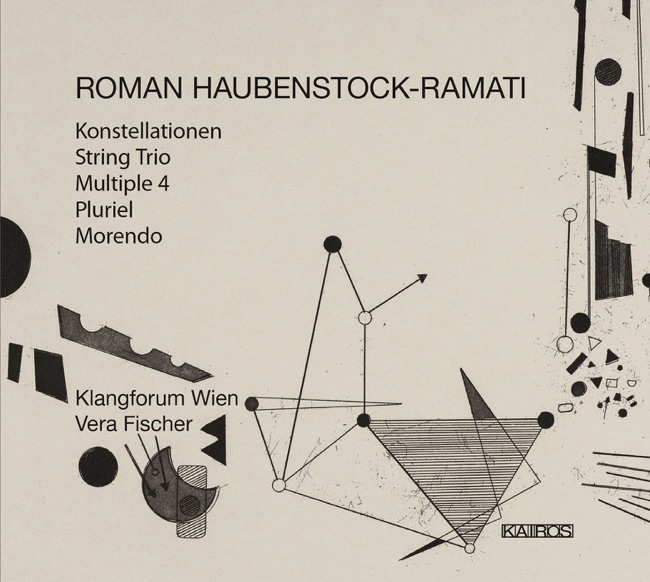
Composer:Roman Haubenstock-RamatiGenre:ChamberCompose Date:1971Average_duration:10:54Konstellationen is a composition by Roman Haubenstock-Ramati, a Polish-Austrian composer, born in 1919. The piece was composed in 1959 and premiered in the same year in Cologne, Germany. It is a work for any number of performers, and the score is open-ended, allowing for a wide range of interpretations. The piece is divided into three movements, each with its own unique characteristics. The first movement is characterized by a series of short, staccato notes that are played in rapid succession. The notes are arranged in a random pattern, creating a sense of chaos and unpredictability. The second movement is more melodic, with longer, sustained notes that are played in a slower tempo. The notes are arranged in a more structured pattern, creating a sense of order and stability. The third movement is a combination of the first two, with short, staccato notes interspersed with longer, sustained notes. One of the defining characteristics of Konstellationen is its use of graphic notation. Rather than using traditional musical notation, Haubenstock-Ramati created a series of symbols and shapes that represent different musical elements. These symbols are arranged on a grid, with each symbol representing a specific pitch, duration, or dynamic level. The performers are free to interpret the symbols in their own way, resulting in a unique performance each time the piece is played. Another important aspect of Konstellationen is its emphasis on collaboration and improvisation. The open-ended nature of the score allows for a wide range of interpretations, and the performers are encouraged to work together to create a cohesive performance. The piece is often performed by large ensembles, with each performer contributing their own unique interpretation of the score. Overall, Konstellationen is a groundbreaking work that challenges traditional notions of musical composition and performance. Its use of graphic notation and emphasis on collaboration and improvisation have influenced generations of composers and performers, making it a seminal work in the history of contemporary music.More....
Main Perform Artists
Cello
Violin
Flute
Accordion
Oboe
Horn
Trombone
Trumpet
Violin
Double Bass
Viola
Saxophone