


Michel Pignolet de Montéclair
Pan et Syrinx
Released Album
Recent Album
Featured Album
Works Info
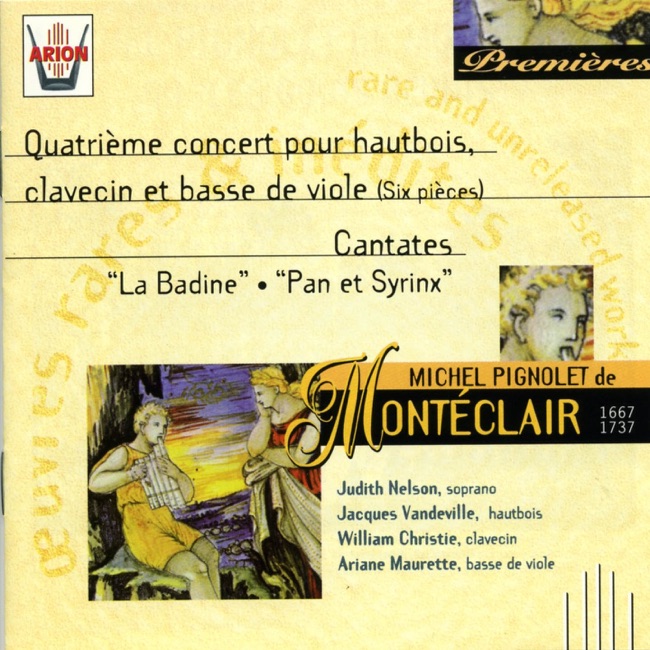
Composer:Michel Pignolet de MontéclairGenre:ChoralStyle:CantataAverage_duration:19:56"Pan et Syrinx" is a chamber cantata composed by Michel Pignolet de Montéclair in the early 18th century. The piece was first performed in Paris in 1723 and is considered one of Montéclair's most famous works. The cantata is divided into five movements, each of which tells a different part of the story of Pan and Syrinx. The first movement, "Pan's Lament," features a mournful melody played by the flute, which represents Pan's sadness at being rejected by Syrinx. The second movement, "Syrinx's Flight," is more lively and features a faster tempo, representing Syrinx's escape from Pan's advances. The third movement, "Pan's Pursuit," is a fast and frenzied piece that represents Pan's pursuit of Syrinx through the forest. The fourth movement, "Syrinx's Transformation," is a slower and more contemplative piece that represents Syrinx's transformation into a reed to escape Pan's grasp. The final movement, "Pan's Lament Continued," is a reprise of the first movement, but with a more resigned and melancholy tone. This movement represents Pan's acceptance of Syrinx's transformation and his continued love for her, even in her new form. Overall, "Pan et Syrinx" is a beautiful and complex piece of music that showcases Montéclair's skill as a composer. The use of the flute to represent Pan and Syrinx's story is particularly effective, as it adds a sense of whimsy and playfulness to the piece. The cantata is a testament to Montéclair's ability to tell a story through music and is still performed and enjoyed by audiences today.More....
Works Music
Released Music
Featured Music
1
Pan and Syrinx
Récitatif
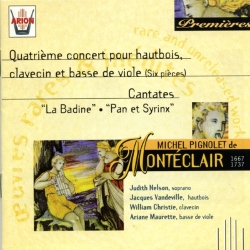
Michel Pignolet de Montéclair: Quatrième concert pour hautbois, clavecin et basse de viole; Cantates
30
2
Michel Pignolet de Montéclair: Quatrième concert pour hautbois, clavecin et basse de viole; Cantates
2:44
3
Pan and Syrinx
Récitatif
Michel Pignolet de Montéclair: Quatrième concert pour hautbois, clavecin et basse de viole; Cantates
2:44
4
Michel Pignolet de Montéclair: Quatrième concert pour hautbois, clavecin et basse de viole; Cantates
2:42
5
Pan and Syrinx
Récitatif
Michel Pignolet de Montéclair: Quatrième concert pour hautbois, clavecin et basse de viole; Cantates
2:37
6
Michel Pignolet de Montéclair: Quatrième concert pour hautbois, clavecin et basse de viole; Cantates
5:35
7
Michel Pignolet de Montéclair: Quatrième concert pour hautbois, clavecin et basse de viole; Cantates
4:13