


Erasmus Widmann
Musikalischen Tugendspiegel
Released Album
Recent Album
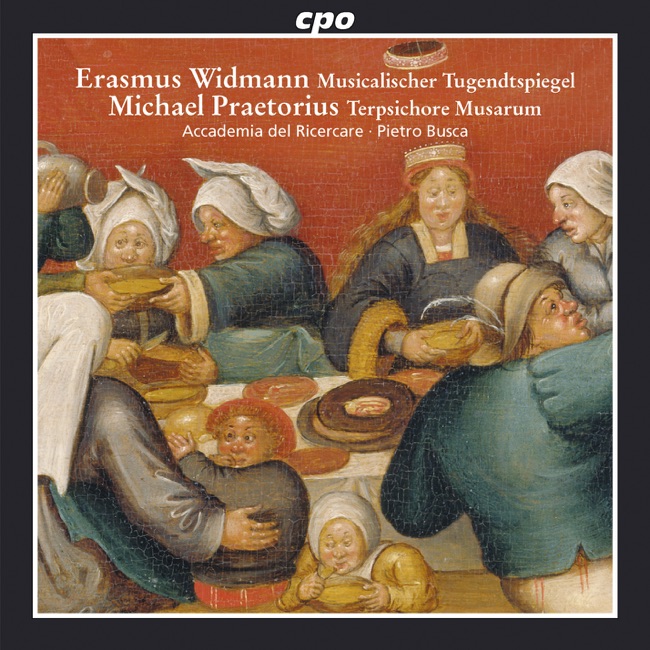

Works Info
Composer:Erasmus WidmannGenre:ChamberStyle:Chamber MusicErasmus Widmann's 'Musikalischen Tugendspiegel' is a collection of instrumental music that was composed in the late 16th century. The work was premiered in 1591 in Nuremberg, Germany. It consists of 28 movements, each of which is named after a particular virtue or moral principle. The 'Musikalischen Tugendspiegel' is a prime example of the instrumental music that was popular during the Renaissance period. The work is written for a small ensemble of instruments, including violins, violas, and bassoons. The music is characterized by its lively rhythms, intricate melodies, and complex harmonies. The first movement of the 'Musikalischen Tugendspiegel' is titled 'Prudentia' (Prudence) and is a lively dance in triple meter. The second movement, 'Justitia' (Justice), is a slower, more contemplative piece that features a beautiful melody played by the violins. Other movements in the collection include 'Fortitudo' (Fortitude), 'Temperantia' (Temperance), and 'Fides' (Faith). One of the most notable characteristics of the 'Musikalischen Tugendspiegel' is its use of counterpoint. This technique involves the simultaneous playing of multiple melodies that are independent of each other but harmonically related. Widmann's use of counterpoint gives the music a rich, complex texture that is both pleasing to the ear and intellectually stimulating. Overall, the 'Musikalischen Tugendspiegel' is a masterful work of instrumental music that showcases the talents of Erasmus Widmann. Its lively rhythms, intricate melodies, and complex harmonies make it a joy to listen to, while its use of counterpoint and exploration of moral principles make it a work of great intellectual depth.More....
Main Perform Artists
Recorder
Block Flute
Recorder
Recorder
Recorder
Recorder