Amy Beach
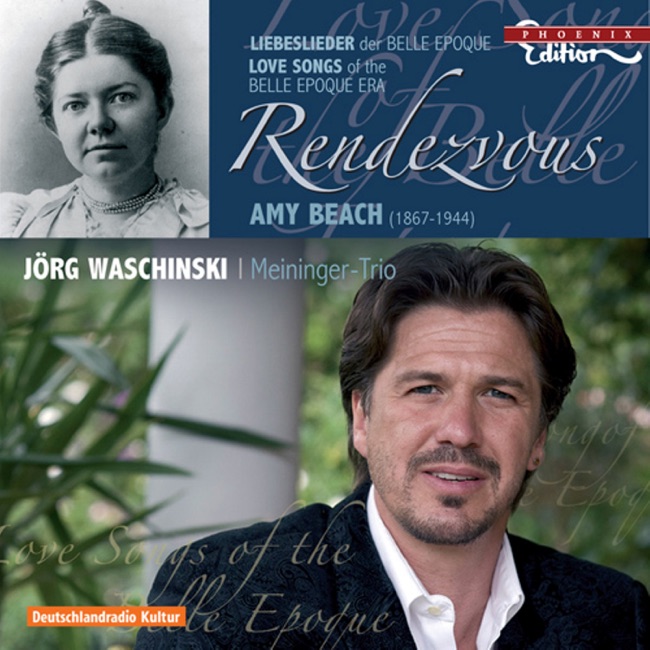
Rendezvous, Op. 120
Released Album
Recent Album
Works Info
Composer:Amy BeachGenre:VocalStyle:Vocal MusicPublication Date:1928Average_duration:3:53Amy Beach's 'Rendezvous, Op. 120' is a chamber work for violin, cello, and piano. It was composed in 1942 and premiered on March 8, 1943, at the MacDowell Club in New York City. The piece consists of three movements: Allegro moderato, Adagio espressivo, and Allegro con fuoco. The first movement, Allegro moderato, begins with a lively and rhythmic piano introduction, followed by the entrance of the violin and cello. The main theme is introduced by the violin, which is then echoed by the cello. The piano provides a steady accompaniment throughout the movement, with occasional flourishes and interjections. The overall mood of the movement is energetic and playful, with a sense of urgency and excitement. The second movement, Adagio espressivo, is a slow and lyrical piece that showcases the expressive capabilities of the violin and cello. The piano provides a gentle and supportive accompaniment, with delicate arpeggios and chords. The violin and cello take turns playing the main melody, with each instrument adding its own unique color and texture. The movement is characterized by its emotional depth and sensitivity, with a sense of longing and introspection. The final movement, Allegro con fuoco, is a fast and fiery piece that brings the work to a thrilling conclusion. The piano sets the tone with a dramatic introduction, followed by the entrance of the violin and cello. The main theme is introduced by the violin, which is then taken up by the cello. The piano provides a virtuosic accompaniment, with rapid arpeggios and cascading runs. The movement is characterized by its energy and intensity, with a sense of triumph and celebration. Overall, 'Rendezvous, Op. 120' is a masterful chamber work that showcases Amy Beach's skill as a composer. The piece is characterized by its lively rhythms, expressive melodies, and virtuosic piano accompaniment. The three movements are distinct in character and mood, but they are united by a sense of unity and coherence. The work is a testament to Beach's talent and creativity, and it remains a beloved piece in the chamber music repertoire.More....
Works Music