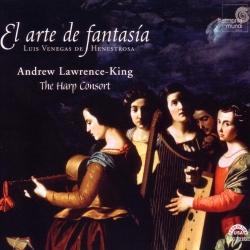
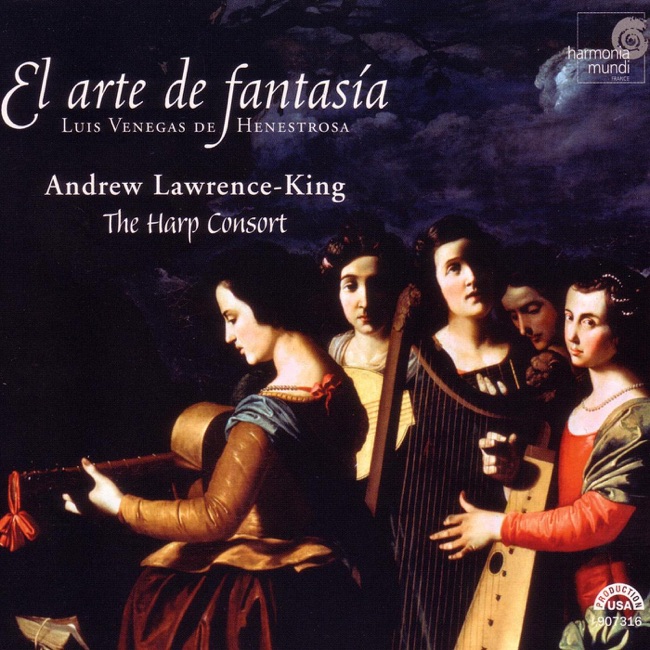
Luis Venegas de Henestrosa
Tres (after Cabezón)
Released Album
Recent Album
Works Info
Composer:Luis Venegas de HenestrosaGenre:MiscellaneousStyle:MiscellaneousAverage_duration:1:39Luis Venegas de Henestrosa was a Spanish composer and organist who lived during the Renaissance period. He is best known for his collection of keyboard music, "Libro de cifra nueva para tecla, harpa y vihuela," which was published in 1557. One of the most famous pieces from this collection is "Tres (after Cabezón)," a set of three variations on a theme by Antonio de Cabezón. "Tres (after Cabezón)" was composed in the mid-16th century and was likely first performed in Spain. The piece consists of three movements, each of which is based on a different variation of Cabezón's original theme. The first movement is a lively and rhythmic variation, featuring fast runs and trills in the right hand. The second movement is slower and more contemplative, with a more complex harmonic structure. The final movement is a virtuosic tour-de-force, featuring rapid arpeggios and intricate fingerwork. One of the most notable characteristics of "Tres (after Cabezón)" is its use of the keyboard as a solo instrument. Henestrosa's writing for the keyboard is highly virtuosic, with complex fingerings and rapid runs that require a high level of technical skill. The piece also showcases Henestrosa's mastery of counterpoint, with intricate harmonies and contrapuntal lines that weave in and out of each other. Overall, "Tres (after Cabezón)" is a masterpiece of Renaissance keyboard music, showcasing the technical and artistic abilities of one of Spain's most talented composers. Its popularity has endured for centuries, and it remains a beloved piece in the repertoire of keyboard players around the world.More....
Works Music
Released Music