


Louis Couperin
Allemande for harpsichord in A minor (Pièces de clavecin, No. 99)
Released Album
Recent Album
Featured Album
Works Info
Composer:Louis CouperinGenre:KeyboardStyle:KeyboardAverage_duration:2:50Louis Couperin was a French Baroque composer and harpsichordist who lived from 1626 to 1661. He was a member of a musical family that included his more famous cousin, François Couperin. Louis Couperin's music was highly regarded during his lifetime, but much of it was lost over the years. However, some of his works have survived, including his "Allemande for harpsichord in A minor (Pièces de clavecin, No. 99)." The "Allemande for harpsichord in A minor" is part of a collection of keyboard pieces that Louis Couperin composed, known as the "Pièces de clavecin." This collection was published posthumously in 1713, long after Couperin's death. The "Allemande" is the second movement of the suite, following the "Prelude." It is a slow, stately dance in triple meter, typical of the Baroque era. The "Allemande" begins with a simple, descending melody in the right hand, accompanied by a chordal pattern in the left hand. This pattern continues throughout the piece, providing a steady harmonic foundation for the melody. The melody itself is highly ornamented, with trills, turns, and other embellishments that were common in Baroque music. The overall effect is one of elegance and refinement, typical of the French Baroque style. One of the notable features of the "Allemande" is its use of dissonance. Couperin employs several dissonant chords throughout the piece, which create a sense of tension and release. This was a common technique in Baroque music, and it adds to the emotional depth of the piece. The "Allemande" was likely composed in the mid-17th century, during Couperin's lifetime. It is not known exactly when it was first performed, but it was likely played on a harpsichord, which was the most common keyboard instrument of the time. Overall, the "Allemande for harpsichord in A minor" is a beautiful example of French Baroque music. Its elegant melody, refined ornamentation, and use of dissonance make it a masterpiece of the genre.More....
Works Music
Released Music
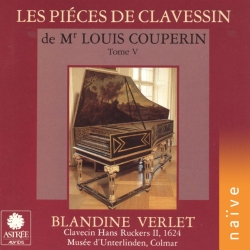
Featured Music
1
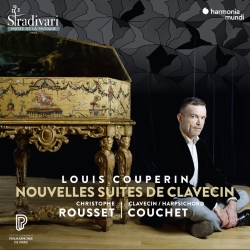
Allemande for harpsichord in A minor (Pieces for harpsichord, No. 99)
Suite en La majeur / A Major: 99. Allemande
3:20