Gottfried August Homilius
Kommt her und sehet an die Wunder Gottes, HoWV 5.21
Released Album
Recent Album
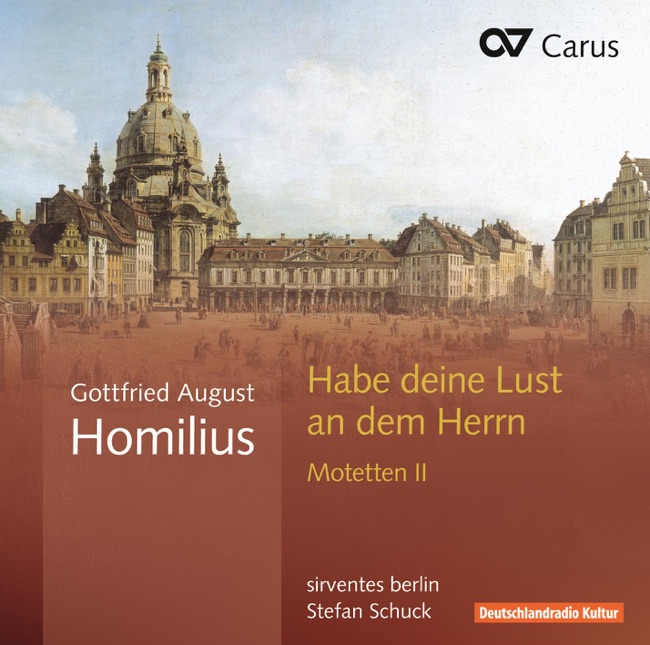
Works Info
Composer:Gottfried August HomiliusGenre:ChoralAverage_duration:3:36'Kommt her und sehet an die Wunder Gottes' is a sacred cantata composed by Gottfried August Homilius, a German composer and church musician of the late Baroque era. The cantata was composed in 1765 and premiered on the 2nd Sunday after Epiphany in the same year. The cantata consists of six movements, including an opening chorus, three arias, a recitative, and a closing chorus. The text is based on Psalm 66:5-6 and Psalm 111:2-3, and it celebrates the wonders of God's creation and his mercy towards his people. The opening chorus, 'Kommt her und sehet an die Wunder Gottes', is a joyful and exuberant piece that sets the tone for the entire cantata. The choir sings in unison, accompanied by a lively orchestra, and the music is characterized by its rhythmic energy and melodic richness. The first aria, 'O wie herrlich ist dein Thron', is a solo for soprano that praises God's majesty and glory. The music is characterized by its soaring melodies and virtuosic vocal lines, and the accompaniment features a prominent oboe solo. The second aria, 'Gott, du bist ein Gott der Gnade', is a solo for alto that celebrates God's mercy and compassion. The music is characterized by its gentle and flowing melodies, and the accompaniment features a delicate interplay between the soloist and the orchestra. The third aria, 'Lobet den Herrn, denn er ist freundlich', is a solo for tenor that praises God's goodness and kindness. The music is characterized by its lively and dance-like rhythms, and the accompaniment features a prominent trumpet solo. The recitative, 'So spricht der Herr', is a declamatory passage that proclaims God's word and his promises to his people. The music is characterized by its dramatic and expressive vocal lines, and the accompaniment features a sparse and understated orchestration. The closing chorus, 'Lobet den Herrn, alle Heiden', is a triumphant and celebratory piece that calls on all nations to praise God. The music is characterized by its grandeur and majesty, and the choir and orchestra combine to create a powerful and uplifting finale. Overall, 'Kommt her und sehet an die Wunder Gottes' is a masterful example of Homilius's skill as a composer of sacred music. The cantata is characterized by its rich harmonies, expressive melodies, and lively rhythms, and it serves as a testament to the enduring power of Baroque music.More....
Works Music