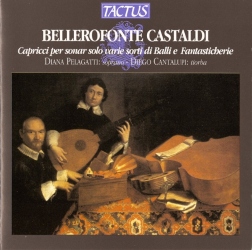
Bellerofonte Castaldi
Arpesca
Released Album
Recent Album

Works Info
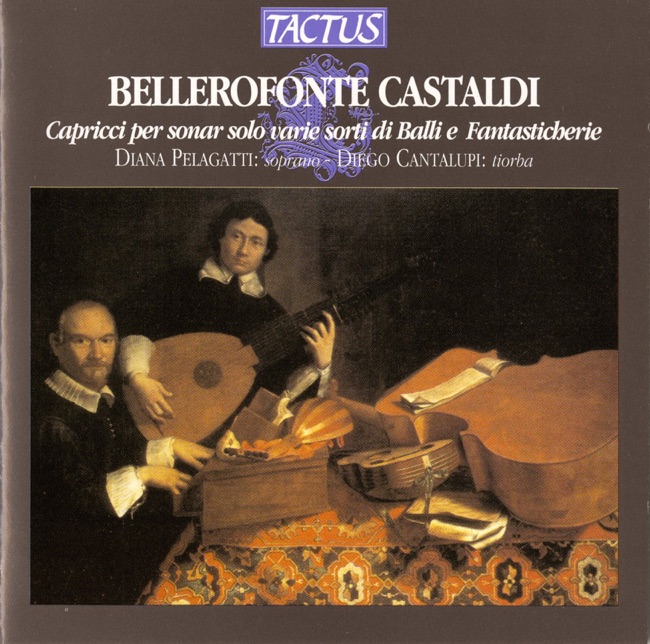
Composer:Bellerofonte CastaldiGenre:ChamberStyle:Chamber MusicAverage_duration:1:49Arpesca is a composition for solo violin and continuo by Bellerofonte Castaldi, an Italian composer and lutenist of the early Baroque era. The piece was composed in the early 17th century and premiered in Bologna, Italy. Arpesca is divided into four movements, each with its own distinct character and style. The first movement is a lively and energetic dance in triple meter, featuring virtuosic passages for the solo violin. The second movement is a slower, more contemplative piece, with a lyrical melody and expressive ornamentation. The third movement is a lively and playful dance in duple meter, with a catchy melody and intricate rhythms. The final movement is a fast and furious dance in triple meter, with rapid-fire runs and arpeggios for the solo violin. One of the most notable characteristics of Arpesca is its use of scordatura tuning, a technique in which the strings of the violin are tuned to a different pitch than usual. In this case, the violin is tuned to G-D-A-E, rather than the standard G-D-A-E tuning. This allows the soloist to play certain passages and chords that would be impossible in standard tuning, and gives the piece a unique and distinctive sound. Another characteristic of Arpesca is its use of ornamentation, which was a common feature of Baroque music. The soloist is expected to add trills, turns, and other embellishments to the written music, in order to add expressiveness and variety to the performance. Overall, Arpesca is a challenging and virtuosic piece that showcases the technical and expressive abilities of the solo violinist. Its use of scordatura tuning and ornamentation make it a unique and distinctive work within the Baroque repertoire.More....
Works Music