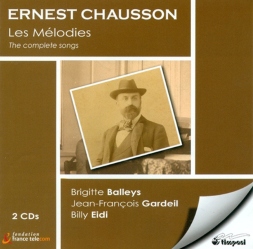
Ernest Chausson
Chansons (4) de Shakespeare, Op. 28
Released Album
Recent Album
Works Info
Composer:Ernest ChaussonGenre:VocalStyle:SongCompose Date:1890 - 1897First Performance:1910Average_duration:6:32Movement_count:4Movement ....Ernest Chausson's 'Chansons (4) de Shakespeare, Op. 28' is a song cycle composed in 1890. The premiere of the work took place on January 23, 1891, in Paris, with the composer himself accompanying the singer. The cycle consists of four songs, each based on a different Shakespearean text. The first song, 'Chanson d'Ophélie,' is based on the character Ophelia from Hamlet. The music is delicate and melancholic, reflecting the character's tragic fate. The second song, 'Chanson de clown,' is based on the character of the clown from Othello. The music is playful and light-hearted, reflecting the character's humorous nature. The third song, 'Chanson d'amour,' is based on the character of Romeo from Romeo and Juliet. The music is passionate and romantic, reflecting the character's intense love for Juliet. The final song, 'Chanson de Falstaff,' is based on the character of Falstaff from Henry IV. The music is jovial and boisterous, reflecting the character's larger-than-life personality. Chausson's 'Chansons de Shakespeare' is characterized by its use of rich harmonies and expressive melodies. The composer's use of chromaticism and modulations adds to the emotional depth of the music. The songs are also notable for their use of word painting, with the music reflecting the emotions and actions of the characters in the texts. Overall, Chausson's 'Chansons de Shakespeare' is a masterful example of the art song genre. The composer's skillful use of music to convey the emotions and actions of the Shakespearean characters makes this cycle a timeless work of art.More....
Works Music
Released Music