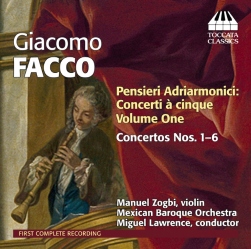
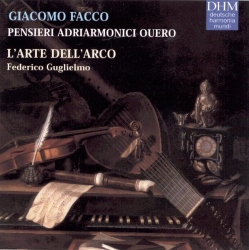
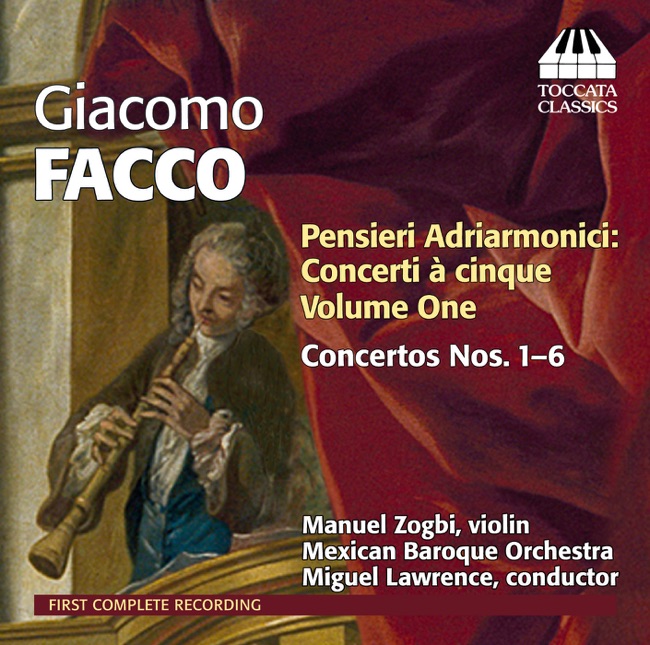
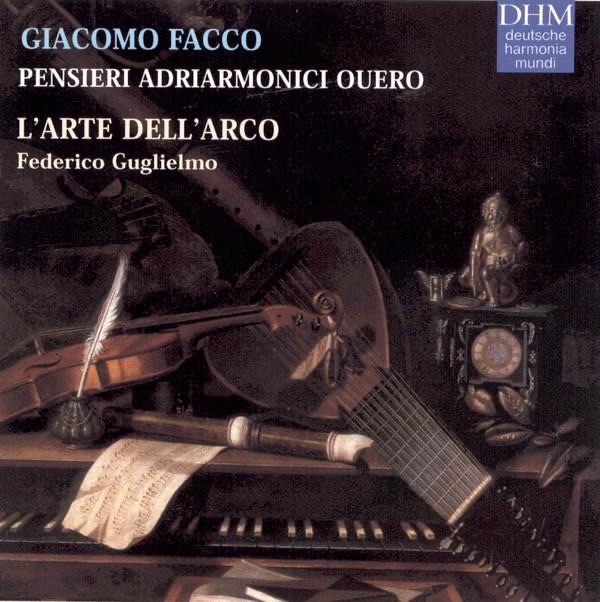
Giacomo Facco
Concerto à 5 in C minor, Op. 1/4
Released Album
Recent Album
Works Info
Composer:Giacomo FaccoGenre:ConcertoStyle:ConcertoCompose Date:1719Publication Date:1720 - 1721Average_duration:12:35Movement_count:3Movement ....Giacomo Facco's Concerto à 5 in C minor, Op. 1/4 is a Baroque concerto grosso composed in the early 18th century. The exact date of composition is unknown, but it is believed to have been written around 1700. The concerto was premiered in Venice, Italy, where Facco was active as a composer and violinist. The concerto consists of four movements: Allegro, Adagio, Allegro, and Presto. The first movement is in sonata form and features a lively and energetic theme that is passed between the soloists and the orchestra. The second movement is a slow and expressive Adagio, featuring a lyrical melody played by the solo violin. The third movement is another fast and lively Allegro, with a more complex and intricate theme than the first movement. The final movement, Presto, is a virtuosic showcase for the soloists, with rapid runs and intricate ornamentation. One of the characteristics of Facco's Concerto à 5 is its use of the concerto grosso form, which was popular in the Baroque era. This form features a small group of soloists (in this case, two violins, cello, and harpsichord) who play against a larger ensemble (in this case, a string orchestra). The soloists and orchestra often engage in a dialogue, with the soloists showcasing their virtuosity and the orchestra providing a rich and supportive accompaniment. Another characteristic of Facco's concerto is its use of counterpoint, or the interweaving of multiple melodies. This is particularly evident in the second and third movements, where the solo violin plays a lyrical melody over a complex and intricate accompaniment. Overall, Facco's Concerto à 5 in C minor, Op. 1/4 is a lively and virtuosic work that showcases the talents of both the soloists and the orchestra. Its use of the concerto grosso form and intricate counterpoint make it a prime example of Baroque music.More....
Works Music
Released Music