Andrea Gabrieli
Toccata del decimo tono, for organ (from "Intonationi d'organo...")
Released Album
Recent Album
Works Info
Composer:Andrea GabrieliGenre:KeyboardStyle:ToccataPublication Date:1593Average_duration:2:23Andrea Gabrieli was a prominent Italian composer and organist of the Renaissance period. He was born in Venice in 1532 and died in 1585. Gabrieli was a prolific composer of sacred and secular music, and his works were highly regarded during his lifetime. One of his most famous compositions is the "Toccata del decimo tono," which is part of his collection of organ intonations called "Intonationi d'organo." The "Toccata del decimo tono" was composed in the late 16th century and is believed to have been written for the organ of the Basilica di San Marco in Venice. The piece is in the key of D minor and is written in a toccata style, which is characterized by fast, virtuosic passages and improvisatory elements. The "Toccata del decimo tono" is divided into three main sections or movements. The first section begins with a bold and dramatic introduction, featuring a series of descending chords that create a sense of tension and anticipation. This leads into a fast and lively section, characterized by rapid arpeggios and virtuosic runs. The second section is more subdued and contemplative, featuring a slower tempo and more lyrical melodies. The final section returns to the fast and lively style of the opening, building to a dramatic conclusion. One of the most notable characteristics of the "Toccata del decimo tono" is its use of chromaticism. Gabrieli employs a wide range of chromatic harmonies and melodic lines, creating a sense of tension and instability that is characteristic of the late Renaissance period. The piece also features a number of virtuosic passages and improvisatory elements, which would have allowed the performer to showcase their technical skill and musical creativity. Overall, the "Toccata del decimo tono" is a masterful example of Gabrieli's skill as a composer and organist. Its bold and dramatic style, combined with its use of chromaticism and virtuosic passages, make it a standout work of the late Renaissance period.More....
Works Music
Released Music
1
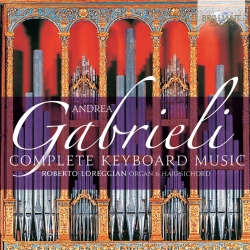
Toccata of the tenth tone, for organ (from "Organ Intonations...")
Intonationi d'organo: Libro primo: Toccata del decimo tono
2:48
2
2:23