Helmut Lachenmann
Consolation I
Works Info
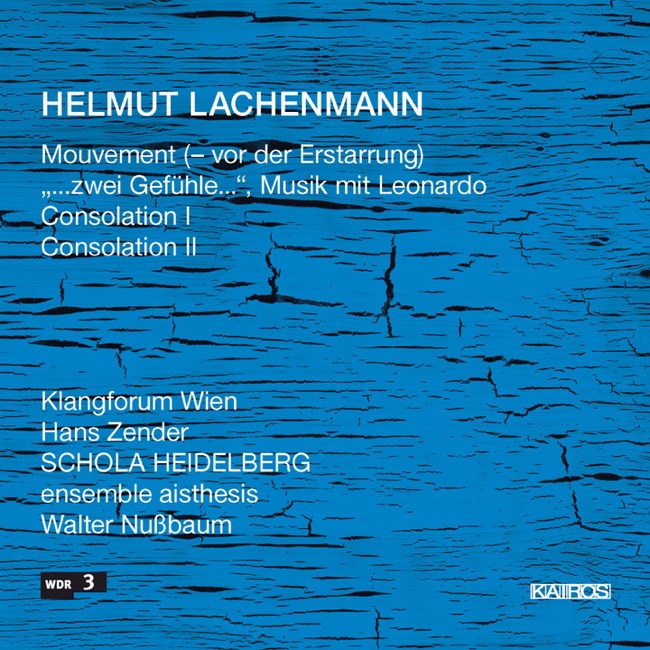
Composer:Helmut LachenmannGenre:ChoralStyle:ChoralCompose Date:1967Average_duration:8:41Helmut Lachenmann's 'Consolation I' is a contemporary classical composition that was composed in 1967. The piece was premiered on October 22, 1967, in Donaueschingen, Germany, by the Ensemble Modern. The composition consists of four movements, each with its own unique characteristics. The first movement, titled 'Sostenuto,' is characterized by long, sustained notes that gradually increase in volume and intensity. The second movement, 'Allegro con fuoco,' is a fast-paced and energetic section that features rapid, staccato notes and sudden dynamic shifts. The third movement, 'Lento,' is a slow and contemplative section that features delicate, intricate melodies and subtle harmonies. The final movement, 'Vivace,' is a lively and playful section that features complex rhythms and intricate counterpoint. One of the most notable characteristics of 'Consolation I' is Lachenmann's use of extended techniques. Throughout the composition, the performers are required to use a variety of unconventional playing techniques, such as playing behind the bridge or using the bow to create percussive sounds on the strings. These techniques create a unique and otherworldly sound that is characteristic of Lachenmann's style. Another notable characteristic of 'Consolation I' is Lachenmann's use of silence. Throughout the composition, there are moments of silence that are just as important as the notes themselves. These moments of silence create a sense of tension and anticipation, and they allow the listener to focus on the subtle nuances of the music. Overall, 'Consolation I' is a complex and challenging composition that showcases Lachenmann's innovative approach to contemporary classical music. Through his use of extended techniques and silence, Lachenmann creates a unique and otherworldly sound that is both captivating and thought-provoking.More....