Napoléon Coste
Les Regrets for oboe & guitar, Op. 36
Released Album
Recent Album

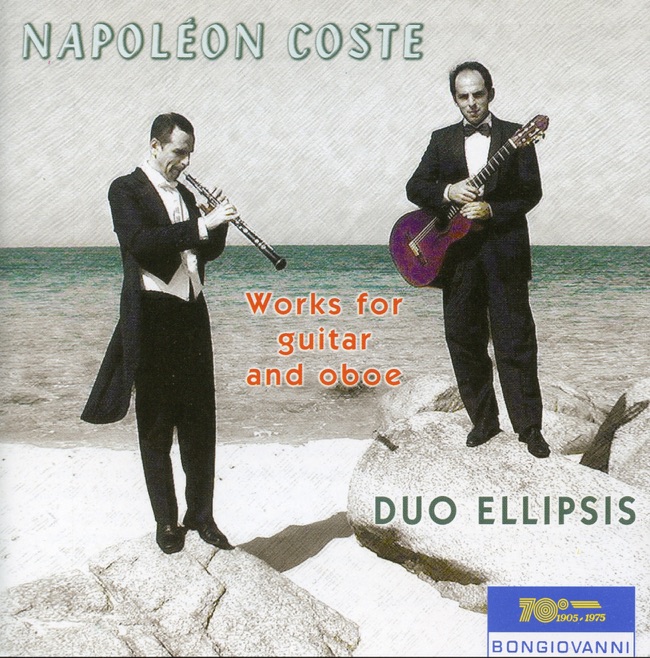
Works Info
Composer:Napoléon CosteGenre:ChamberStyle:Chamber MusicAverage_duration:2:53Les Regrets for oboe and guitar, Op. 36 is a chamber music piece composed by Napoléon Coste, a French guitarist and composer, in 1868. The piece is divided into three movements, each with its own unique characteristics. The first movement, marked Andante, is a melancholic and introspective piece that showcases the oboe's lyrical capabilities. The guitar provides a delicate accompaniment, with arpeggios and gentle chords that support the oboe's melody. The movement is characterized by its use of rubato, with the oboe and guitar taking turns leading the tempo. The second movement, marked Allegro moderato, is a lively and playful piece that features a dialogue between the oboe and guitar. The oboe introduces a cheerful melody that is then echoed by the guitar. The two instruments engage in a call-and-response pattern, with the oboe and guitar taking turns leading the melody. The movement is characterized by its use of syncopation, with the oboe and guitar playing off the beat. The third movement, marked Andante sostenuto, is a somber and reflective piece that returns to the introspective mood of the first movement. The oboe introduces a mournful melody that is accompanied by the guitar's arpeggios. The movement is characterized by its use of chromaticism, with the oboe and guitar exploring a range of tonalities. Les Regrets for oboe and guitar, Op. 36 premiered in Paris in 1868, and it quickly became a popular piece in the chamber music repertoire. The piece is notable for its use of the oboe, an instrument that was not commonly used in chamber music at the time. Coste's skillful writing for the oboe and guitar creates a delicate and intimate sound that is both expressive and nuanced.More....
Works Music
Released Music