


Francesco Geminiani
Trio Sonata for violin, violone (or 2 violins) & continuo No. 6 in G minor, Op. 1/6
Released Album
Recent Album
Featured Album
Works Info
Composer:Francesco GeminianiGenre:ChamberCompose Date:1716Publication Date:1716Average_duration:16:10Francesco Geminiani's Trio Sonata for violin, violone (or 2 violins) & continuo No. 6 in G minor, Op. 1/6 was composed in the early 18th century. The exact date of composition is unknown, but it is believed to have been written around 1716-1717. The piece was first premiered in London, where Geminiani had settled after leaving Italy. The Trio Sonata is divided into four movements, typical of the Baroque era. The first movement is marked Adagio and is in G minor. It is a slow and somber introduction to the piece, with the violin and violone playing in unison. The second movement is marked Allegro and is in G major. It is a lively and energetic movement, with the violin and violone playing off each other in a call-and-response style. The third movement is marked Adagio and is in B-flat major. It is a slower and more contemplative movement, with the violin taking the lead and the violone providing a supportive bass line. The final movement is marked Allegro and is in G minor. It is a fast and lively movement, with the violin and violone playing in unison and trading off melodic lines. The Trio Sonata showcases Geminiani's skill as a composer and his ability to write for multiple instruments. The violin and violone are given equal importance in the piece, with both instruments playing important melodic and harmonic roles. The continuo, typically played on a harpsichord or organ, provides a supportive bass line and adds depth to the overall sound of the piece. Overall, Geminiani's Trio Sonata for violin, violone (or 2 violins) & continuo No. 6 in G minor, Op. 1/6 is a beautiful example of Baroque chamber music. Its four movements showcase a range of emotions and styles, from the somber opening to the lively finale. The piece is a testament to Geminiani's skill as a composer and his ability to write for multiple instruments in a way that is both technically challenging and musically satisfying.More....
Works Music
Released Music
1
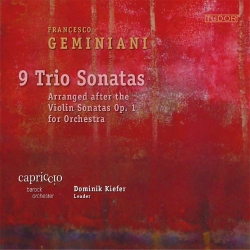
2:25
2

3:6
3
Trio Sonata for violin, violone (or 2 violins) & continuo No. 6 in G minor, Op. 1/6
Tendrement for Tenor Violin, Cello and Bass
3:35
Featured Music
1
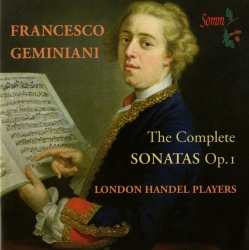
3:41
2
1:15
3
3:5
4
3:25
5
4:44