


Jan Pieterszoon Sweelinck
Diligam te Domine, fortitudo mea (Cantiones Sacrae No. 5)
Released Album
Recent Album
Works Info
Composer:Jan Pieterszoon SweelinckGenre:ChoralStyle:ChoralPublication Date:1619Average_duration:3:20Jan Pieterszoon Sweelinck was a Dutch composer and organist of the late Renaissance and early Baroque periods. He was born in Deventer, Netherlands, in 1562 and died in Amsterdam in 1621. Sweelinck was one of the most important composers of his time, and his music had a significant influence on the development of Baroque music. One of Sweelinck's most famous works is "Diligam te Domine, fortitudo mea" (I will love you, O Lord, my strength), which is the fifth piece in his collection of sacred songs, "Cantiones Sacrae." The collection was published in 1619, two years before Sweelinck's death. The piece is written for four voices (soprano, alto, tenor, and bass) and is based on Psalm 18:2-3. It is a motet, which is a type of choral music that is usually based on a religious text. The piece is in Latin, which was the language of the Catholic Church at the time. The piece is divided into three movements. The first movement is a slow and solemn introduction, in which the choir sings the words "Diligam te Domine, fortitudo mea" in unison. The second movement is faster and more lively, with the choir singing in four-part harmony. The third movement is a return to the slow and solemn style of the first movement, with the choir singing the words "Deus meus, adiutor meus" (My God, my helper) in unison. The piece is characterized by Sweelinck's use of polyphony, which is the technique of combining multiple voices to create a complex and harmonious sound. Sweelinck was a master of this technique, and his music is known for its intricate and beautiful harmonies. The piece also features Sweelinck's use of chromaticism, which is the use of notes outside of the traditional diatonic scale. This gives the piece a unique and expressive sound. Overall, "Diligam te Domine, fortitudo mea" is a beautiful and powerful piece of music that showcases Sweelinck's mastery of polyphony and chromaticism. It is a testament to his skill as a composer and his contribution to the development of Baroque music.More....
Works Music
Released Music
1
Diligam te Domine, fortitudo mea (Sacrae Songs No. 5)
Diligam te, Domine, for 5 voices, SWWV 155
3:5
3
4:10
4
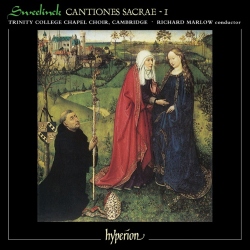
2:53
5
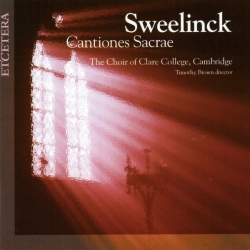
3:47