Johann Georg Pisendel
Sonata for violin & continuo in D major
Released Album
Recent Album

Featured Album
Works Info
Composer:Johann Georg PisendelAverage_duration:11:07Movement_count:3Movement ....Johann Georg Pisendel's Sonata for violin & continuo in D major was composed in the early 18th century. The exact date of composition is unknown, but it is believed to have been written between 1717 and 1725. The sonata was premiered in Dresden, where Pisendel was a member of the court orchestra. The sonata consists of four movements: Adagio, Allegro, Adagio, and Allegro. The first movement, Adagio, is a slow and expressive introduction that sets the tone for the rest of the piece. The second movement, Allegro, is a lively and energetic dance that showcases the virtuosity of the violinist. The third movement, Adagio, is another slow and expressive section that provides a contrast to the previous movement. The final movement, Allegro, is a fast and lively dance that brings the sonata to a thrilling conclusion. One of the characteristics of Pisendel's Sonata for violin & continuo in D major is its use of counterpoint. The violin and continuo parts are intricately woven together, creating a complex and rich texture. Another characteristic is the use of ornamentation, which was common in Baroque music. Pisendel's sonata features trills, turns, and other embellishments that add to the beauty and complexity of the piece. Overall, Pisendel's Sonata for violin & continuo in D major is a stunning example of Baroque music. Its intricate counterpoint, use of ornamentation, and lively dance movements make it a joy to listen to and a challenging piece for violinists to perform.More....
Works Music
Released Music

4
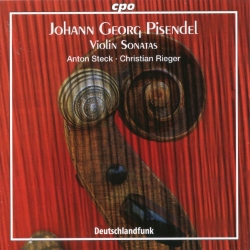
3:11
5
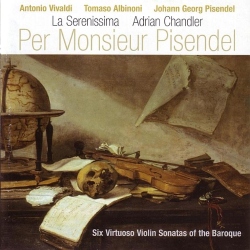
4:40
Featured Music