Antoine Brumel
Missa "Et Ecce Terrae Motus"
Released Album
Recent Album
Featured Album
Works Info
Composer:Antoine BrumelGenre:ChoralStyle:MassCompose Date:ca. 1495Average_duration:49:34Movement_count:13Movement ....Antoine Brumel's 'Missa Et Ecce Terrae Motus' is a monumental work of Renaissance polyphony. It was composed in the early 16th century, likely around 1505-1510, and premiered in the court of Duke Ercole I d'Este in Ferrara, Italy. The title of the mass translates to "And behold, the earth moved," a reference to the earthquake that struck Ferrara in 1503. The mass is divided into six movements: Kyrie, Gloria, Credo, Sanctus, Agnus Dei I, and Agnus Dei II. Each movement is characterized by Brumel's intricate polyphonic writing, with multiple voices weaving in and out of each other in a complex web of sound. The mass is scored for four voices (soprano, alto, tenor, and bass), with occasional divisi sections that create a richer, more complex texture. One of the most striking features of the mass is Brumel's use of imitation. In many sections, one voice will introduce a melody or motif, which is then picked up and echoed by the other voices in turn. This creates a sense of unity and coherence throughout the work, as well as a sense of forward momentum that propels the listener from one movement to the next. Another notable aspect of the mass is Brumel's use of harmonic tension and release. He frequently employs dissonant chords and unexpected harmonic shifts, which create moments of heightened drama and intensity. These moments are often resolved with a return to more stable, consonant harmonies, which provide a sense of resolution and closure. Overall, 'Missa Et Ecce Terrae Motus' is a masterful example of Renaissance polyphony. Its intricate textures, complex harmonies, and use of imitation and tension make it a compelling and rewarding work to listen to.More....
Works Music
Released Music
2
8:40
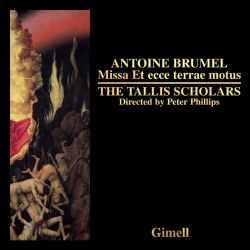
Featured Music