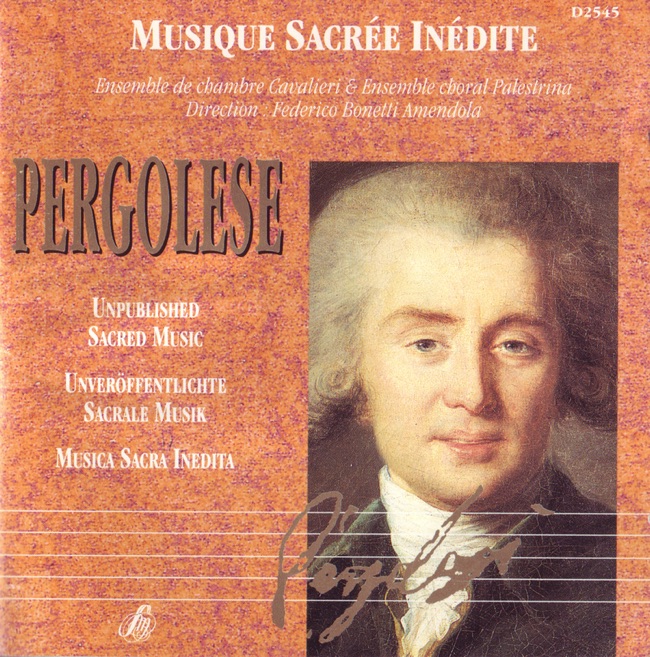
Giovanni Pergolesi
Domine, ad adjuvandum me
Released Album
Recent Album
Works Info
Composer:Giovanni PergolesiGenre:ChoralStyle:ChoralFirst Performance:Dec 31, 1732Average_duration:5:35Giovanni Battista Pergolesi was an Italian composer of the Baroque era, born in 1710 in Jesi, Italy. He is best known for his operas and sacred music, including the motet "Domine, ad adjuvandum me," which was composed in 1736. The motet "Domine, ad adjuvandum me" is a sacred work that was composed for the Vespers service of the Roman Catholic Church. It is written for four-part choir, with soloists and orchestra. The piece is divided into three movements, each with its own distinct character and musical style. The first movement, "Domine, ad adjuvandum me," is a lively and joyful piece that begins with a fanfare-like introduction from the orchestra. The choir then enters with a joyful and energetic melody, which is repeated several times throughout the movement. The soloists also have a prominent role in this movement, with each taking turns to sing a short solo section. The second movement, "Gloria Patri," is a more subdued and contemplative piece. The choir sings a simple and beautiful melody, with the soloists providing a gentle counterpoint. The orchestra provides a delicate accompaniment, with the strings playing softly in the background. The final movement, "Sicut erat in principio," is a return to the joyful and energetic style of the first movement. The choir and orchestra combine to create a lively and celebratory atmosphere, with the soloists once again taking turns to sing short solo sections. The piece ends with a triumphant flourish from the orchestra. Overall, "Domine, ad adjuvandum me" is a beautiful and uplifting piece of sacred music. Pergolesi's use of contrasting musical styles and the interplay between the choir, soloists, and orchestra create a rich and dynamic musical experience. The piece premiered in 1736 and has since become a beloved part of the sacred music repertoire.More....