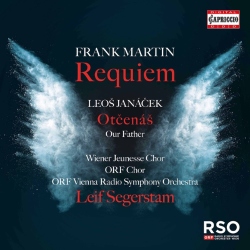
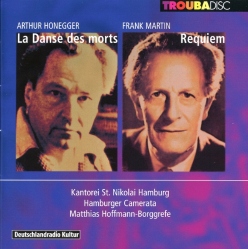
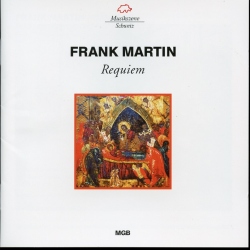
Frank Martin
Requiem
Released Album
Recent Album

Works Info
Composer:Frank MartinGenre:ChoralStyle:RequiemCompose Date:1971 - 1972First Performance:May 4, 1973Average_duration:37:13Movement_count:5Movement ....Frank Martin's Requiem is a choral work that was composed between 1941 and 1948. It was premiered in 1948 in Basel, Switzerland, with the Basel Chamber Choir and the Basel Symphony Orchestra. The Requiem is divided into twelve movements, each of which is based on a text from the Latin Mass for the Dead. The first movement, "Requiem aeternam," begins with a somber and mournful choral introduction, which is followed by a solo soprano singing the text "Requiem aeternam dona eis, Domine" (Grant them eternal rest, O Lord). The movement ends with a return to the choral introduction. The second movement, "Dies irae," is a dramatic and intense depiction of the Day of Judgment. The choir sings the text "Dies irae, dies illa" (Day of wrath, that day), accompanied by a powerful orchestral score. The third movement, "Tuba mirum," features a solo bass singing the text "Tuba mirum spargens sonum" (The trumpet, casting a wondrous sound). The movement is characterized by its use of dissonant harmonies and complex rhythms. The fourth movement, "Quid sum miser," is a solo for mezzo-soprano, who sings the text "Quid sum miser tunc dicturus" (What shall I, a wretch, say then?). The movement is marked by its hauntingly beautiful melody and its use of chromatic harmonies. The fifth movement, "Rex tremendae," is a choral piece that features the text "Rex tremendae majestatis" (King of tremendous majesty). The movement is characterized by its use of complex harmonies and its dramatic choral writing. The sixth movement, "Recordare," is a duet for soprano and mezzo-soprano, who sing the text "Recordare, Jesu pie" (Remember, merciful Jesus). The movement is marked by its lyrical melody and its use of rich harmonies. The seventh movement, "Ingemisco," is a solo for tenor, who sings the text "Ingemisco tamquam reus" (I groan as one guilty). The movement is characterized by its use of chromatic harmonies and its dramatic vocal writing. The eighth movement, "Confutatis," is a choral piece that features the text "Confutatis maledictis" (When the damned are confounded). The movement is marked by its use of dissonant harmonies and its dramatic choral writing. The ninth movement, "Lacrimosa," is a choral piece that features the text "Lacrimosa dies illa" (That day of tears). The movement is characterized by its use of rich harmonies and its mournful choral writing. The tenth movement, "Domine Jesu Christe," is a duet for tenor and bass, who sing the text "Domine Jesu Christe, Rex gloriae" (Lord Jesus Christ, King of glory). The movement is marked by its use of complex harmonies and its dramatic vocal writing. The eleventh movement, "Hostias," is a choral piece that features the text "Hostias et preces tibi, Domine" (Sacrifices and prayers to you, O Lord). The movement is characterized by its use of rich harmonies and its dramatic choral writing. The twelfth and final movement, "Lux aeterna," is a choral piece that features the text "Lux aeterna luceat eis, Domine" (May eternal light shine upon them, O Lord). The movement is marked by its use of rich harmonies and its triumphant choral writing.More....
Works Music
Released Music