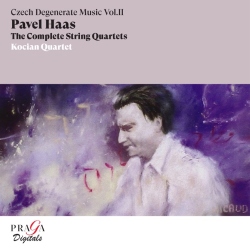
Pavel Haas
String quartet No. 1 in C sharp minor, Op. 3
Works Info
Composer:Pavel HaasGenre:ChamberStyle:QuartetCompose Date:1920Average_duration:12:53Pavel Haas composed his String Quartet No. 1 in C sharp minor, Op. 3 in 1920, when he was only 21 years old. The piece premiered in Brno, Czechoslovakia, in 1921, and was performed by the Moravian Quartet. The quartet consists of four movements, each with its own distinct character and mood. The first movement, marked Allegro moderato, begins with a hauntingly beautiful melody played by the first violin. The other instruments soon join in, creating a rich and complex texture. The movement is characterized by its use of chromaticism and dissonance, which create a sense of tension and unease. The second movement, marked Adagio, is a slow and mournful piece. The cello takes the lead in this movement, playing a melancholy melody that is echoed by the other instruments. The movement is marked by its use of long, sustained notes and its expressive use of dynamics. The third movement, marked Allegro, is a lively and energetic piece. The movement is characterized by its use of syncopation and its playful, dance-like rhythms. The movement is also notable for its use of pizzicato, or plucked strings, which add to the playful character of the piece. The final movement, marked Allegro con brio, is a fast and frenetic piece. The movement is characterized by its use of rapid, virtuosic passages and its driving rhythms. The movement builds to a thrilling climax before coming to a sudden and unexpected end. Overall, Haas's String Quartet No. 1 is a powerful and emotionally charged work. It showcases Haas's skill as a composer and his ability to create complex and nuanced musical textures. The quartet is also notable for its use of dissonance and chromaticism, which were innovative for their time and helped to establish Haas as a leading figure in the Czech musical scene.More....
Works Music
Released Music