Georg Philipp Telemann
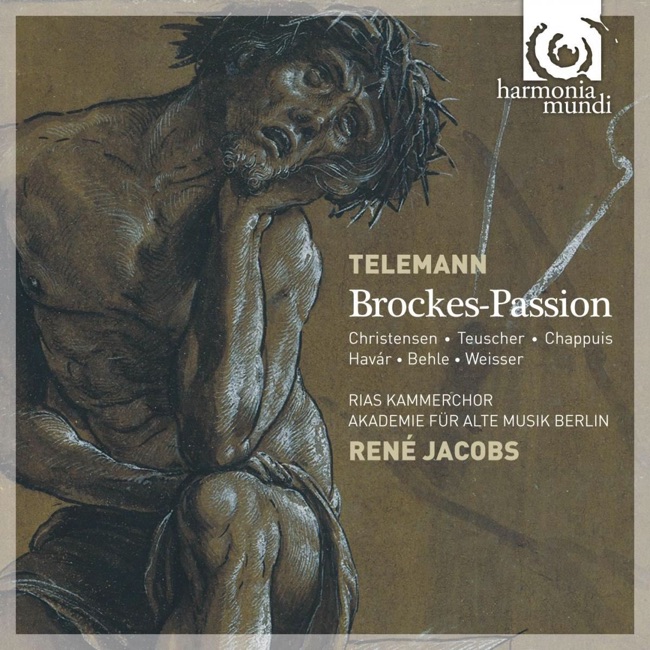
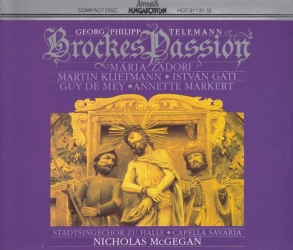
Der für die Sünden der Welt gemarterte und sterbende Jesus "Brockes-Passion", TWV 5:1
Released Album
Recent Album
Works Info
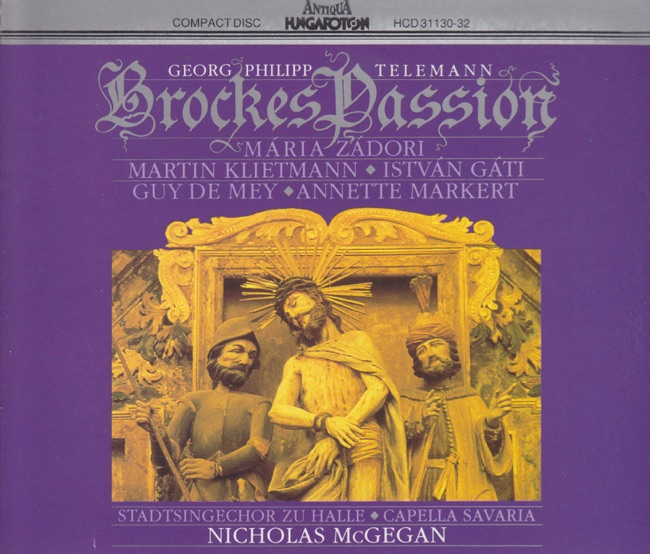
Composer:Georg Philipp TelemannGenre:ChoralStyle:ChoralCompose Date:1716Publication Date:1722Average_duration:145:46Georg Philipp Telemann's "Der für die Sünden der Welt gemarterte und sterbende Jesus Brockes-Passion, TWV 5:1" is a sacred oratorio composed in 1716. It premiered in Hamburg on Good Friday of the same year. The work is based on the text of Barthold Heinrich Brockes, a German poet who wrote a series of Passion texts in the early 18th century. The oratorio is divided into two parts, with a total of 44 movements. The first part depicts the events leading up to Jesus' crucifixion, while the second part focuses on his death and resurrection. The movements are varied in style and instrumentation, ranging from solo arias and duets to choruses and instrumental interludes. One of the most notable characteristics of Telemann's Brockes-Passion is its use of descriptive and emotive language. Brockes' text is filled with vivid imagery and emotional language, and Telemann's music reflects this through its use of expressive melodies, harmonies, and instrumentation. For example, in the aria "Ach, mein Sinn," the soloist sings of the agony and despair of Jesus in the garden of Gethsemane, and Telemann's music reflects this through its use of dissonant harmonies and chromaticism. Another characteristic of the work is its use of musical symbolism. For example, the opening chorus, "Kommt, ihr Töchter," features a descending chromatic melody that represents the descent of Jesus from heaven to earth. The use of musical symbolism adds depth and meaning to the text, and helps to convey the emotional and spiritual significance of the Passion story. Overall, Telemann's "Der für die Sünden der Welt gemarterte und sterbende Jesus Brockes-Passion, TWV 5:1" is a powerful and moving work that combines expressive music with vivid and emotive text. Its use of descriptive language, musical symbolism, and varied instrumentation make it a masterpiece of the Baroque era.More....
Works Music
Released Music
1
9:23
2
Jesus martyred and dying for the sins of the world "Brockes Passion", TWV 5:1
'Heil der Welt, dein schmerzlich Leiden'
7:17
3
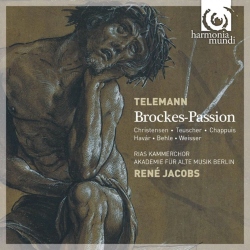
Jesus martyred and dying for the sins of the world "Brockes Passion", TWV 5:1
Part 1. Scene 1. No. 1. Sinfonia
7:48
4
8:42