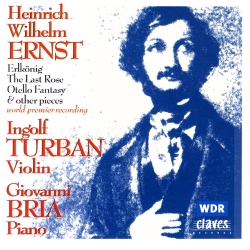
Heinrich Wilhelm Ernst
Hungarian Melodies for violin & piano in A major, Op. 22
Released Album
Recent Album
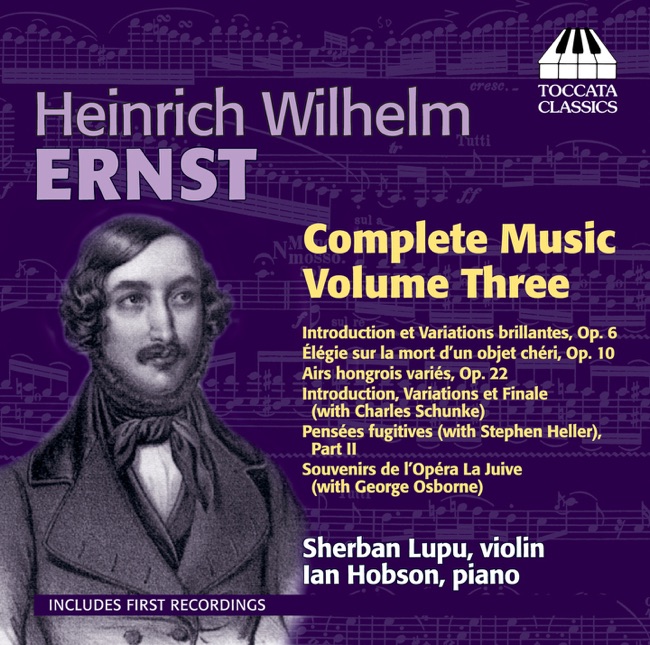
Featured Album
Works Info
Composer:Heinrich Wilhelm ErnstGenre:ChamberStyle:Chamber MusicAverage_duration:6:49Hungarian Melodies for violin and piano in A major, Op. 22 is a composition by Heinrich Wilhelm Ernst, a German violinist and composer. The piece was composed in the mid-19th century and premiered in 1854. It consists of three movements, each with its own unique characteristics. The first movement, marked Allegro moderato, is a lively and energetic piece that showcases the virtuosity of both the violin and piano. The violin plays a series of fast and intricate runs, while the piano provides a driving accompaniment. The movement is characterized by its use of Hungarian folk melodies, which give it a distinctively Eastern European flavor. The second movement, marked Adagio, is a slower and more contemplative piece. The violin plays a mournful melody over a simple piano accompaniment, creating a sense of melancholy and longing. The movement is notable for its use of expressive vibrato and dynamic contrasts, which give it a rich and emotional quality. The third movement, marked Allegro vivace, is a lively and playful piece that brings the composition to a joyful conclusion. The violin and piano trade off melodic lines, creating a sense of dialogue and interaction between the two instruments. The movement is characterized by its use of syncopated rhythms and rapid-fire runs, which give it a sense of excitement and energy. Overall, Hungarian Melodies for violin and piano in A major, Op. 22 is a virtuosic and expressive composition that showcases the talents of both the violinist and pianist. Its use of Hungarian folk melodies gives it a unique and distinctive flavor, while its three movements provide a range of emotional and musical experiences for the listener.More....
Works Music
Released Music
2

6:56
4
6:29
5
6:49
Featured Music