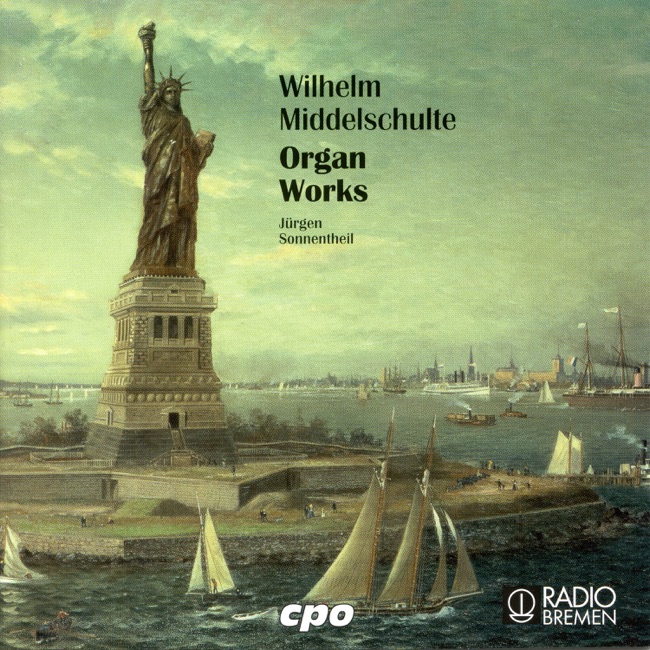
Wilhelm Middelschulte
Perpetuum Mobile (afte J.S. Bach's "Wedge" Fugue)
Released Album
Recent Album
Works Info
Composer:Wilhelm MiddelschulteGenre:ConcertoStyle:ConcertoAverage_duration:3:01Perpetuum Mobile (after J.S. Bach's Wedge Fugue) is a composition by Wilhelm Middelschulte, a German organist and composer. The piece was composed in 1917 and premiered in the same year. It is a single-movement work that is approximately six minutes in length. The piece is based on J.S. Bach's Wedge Fugue, which is a short fugue that is notable for its use of a wedge-shaped subject. Middelschulte takes this subject and uses it as the basis for his own composition, which is a virtuosic display of organ technique. The piece is characterized by its perpetual motion, with the subject being passed between the hands and feet of the organist in a continuous stream of notes. The piece is divided into three sections, each of which is based on a different variation of the subject. The first section is characterized by its use of the full organ, with the subject being played in the pedals while the hands play a series of rapid arpeggios. The second section is more subdued, with the subject being played in the manuals while the pedals provide a steady bass line. The third section is the most virtuosic, with the subject being played in both the hands and feet in a rapid and complex pattern. Overall, Perpetuum Mobile (after J.S. Bach's Wedge Fugue) is a challenging and impressive work that showcases the technical abilities of the organist. It is a testament to Middelschulte's skill as a composer and his ability to take a simple subject and turn it into a complex and engaging piece of music.More....
Works Music