Reza Vali
Calligraphy No. 4
Released Album
Recent Album
Works Info
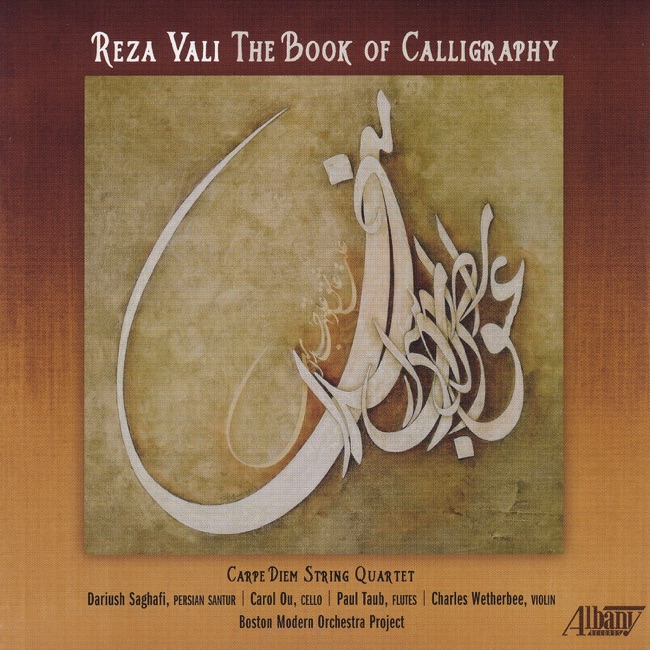
Composer:Reza ValiGenre:ChamberStyle:Chamber MusicCompose Date:2001Average_duration:7:07Calligraphy No. 4 is a contemporary classical composition by Iranian-American composer Reza Vali. It was composed in 2000 and premiered on March 2, 2001, by the Pittsburgh New Music Ensemble. The piece is written for a chamber ensemble consisting of flute, clarinet, violin, cello, and piano. The composition is divided into three movements, each of which is inspired by a different Persian calligraphic style. The first movement, "Nasta'liq," is named after a cursive script that was commonly used in Persian calligraphy during the 14th and 15th centuries. The movement is characterized by its fluid and sinuous lines, which are reflected in the music through the use of long, flowing melodies and intricate ornamentation. The second movement, "Shekasteh," is named after a broken script that was popular during the 17th and 18th centuries. The movement is characterized by its jagged and angular lines, which are reflected in the music through the use of dissonant harmonies and abrupt rhythmic changes. The third and final movement, "Siah-Mashq," is named after a black practice script that is used by calligraphers to practice their skills. The movement is characterized by its repetitive and meditative quality, which is reflected in the music through the use of ostinato patterns and slowly evolving harmonies. Overall, Calligraphy No. 4 is a highly evocative and expressive work that draws on the rich tradition of Persian calligraphy to create a unique and compelling musical experience. Vali's use of traditional Persian musical elements, such as microtonal intervals and rhythmic modes, adds an additional layer of depth and complexity to the composition, making it a truly remarkable achievement in contemporary classical music.More....
Works Music
Released Music