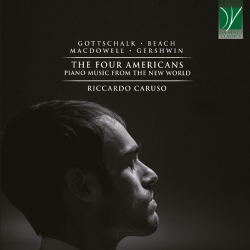
Amy Beach
Eskimos, Op. 64
Released Album
Recent Album
-

-

-
 Riccardo CarusoMarch 25, 2022
 -

-

-

Works Info
Composer:Amy BeachGenre:KeyboardStyle:Character PiecePublication Date:1907Average_duration:8:18Movement_count:4Movement ...."Eskimos, Op. 64" is a chamber work composed by Amy Beach in 1907. It premiered on March 11, 1908, at the MacDowell Club in New York City. The piece is divided into four movements, each of which is characterized by its unique musical style and thematic material. The first movement, "The Land of Desolation," is marked by its haunting, melancholic melody and sparse, icy textures. Beach uses a variety of extended techniques, such as sul ponticello and col legno, to create a sense of desolation and isolation. The movement is structured around a series of variations on the opening theme, which gradually build in intensity and complexity before subsiding into a quiet, mournful coda. The second movement, "The Call of the Wild," is a lively, energetic scherzo that evokes the frenzied activity of a pack of wolves. Beach employs a variety of rhythmic devices, such as syncopation and hemiola, to create a sense of urgency and excitement. The movement is characterized by its driving, repetitive ostinato figures and its use of unconventional instrumental techniques, such as pizzicato and glissando. The third movement, "The Igloo," is a slow, introspective interlude that explores the interior of an Eskimo dwelling. Beach uses a variety of timbral effects, such as muted strings and harmonics, to create a sense of intimacy and warmth. The movement is structured around a simple, lyrical melody that is passed between the instruments, gradually building in intensity before fading away into silence. The final movement, "The Dance of the Seal Hunters," is a lively, rhythmic dance that celebrates the successful hunt of a seal. Beach employs a variety of folk-like melodies and dance rhythms, such as the jig and reel, to create a sense of joy and celebration. The movement is characterized by its lively, syncopated rhythms and its use of unconventional instrumental techniques, such as double stops and trills. Overall, "Eskimos, Op. 64" is a highly evocative and imaginative work that showcases Beach's skill as a composer and her ability to create vivid musical landscapes. The piece is notable for its use of unconventional instrumental techniques, its incorporation of folk-like melodies and rhythms, and its evocative portrayal of the natural world.More....