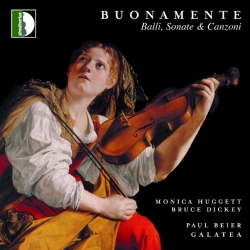
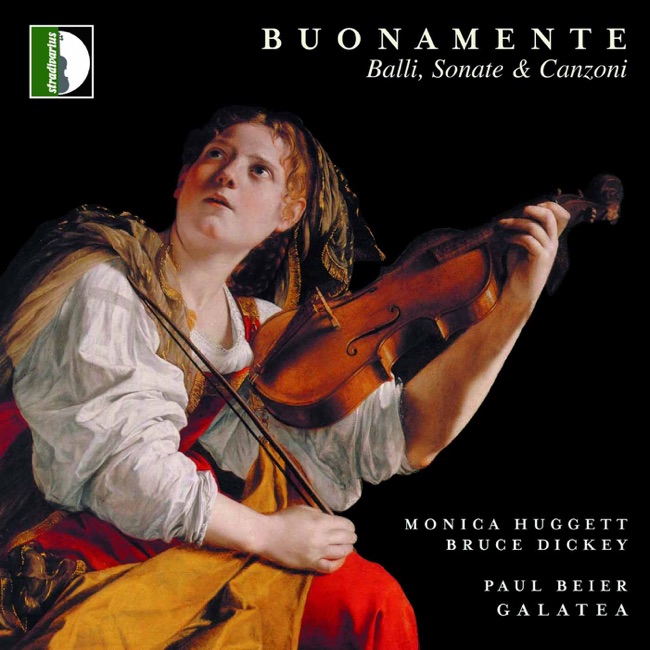
Giovanni Battista Buonamente
Sonata Quinta a 2
Released Album
Recent Album
Works Info
Composer:Giovanni Battista BuonamenteGenre:ChamberStyle:SonataAverage_duration:5:05Giovanni Battista Buonamente was an Italian composer and violinist who lived in the early 17th century. He was a prominent figure in the development of the sonata, a genre that would become one of the most important forms of instrumental music in the Baroque era. One of his most famous works is the Sonata Quinta a 2, which was composed in the early 1600s. The Sonata Quinta a 2 is a chamber work for two violins, viola, and basso continuo. It is divided into four movements, each with its own distinct character and mood. The first movement is a lively and energetic Allegro, characterized by its driving rhythms and virtuosic violin writing. The second movement is a more introspective Adagio, featuring expressive melodies and rich harmonies. The third movement is a playful and dance-like Allegro, with a catchy melody and lively rhythms. The final movement is a fast and furious Presto, showcasing the technical prowess of the performers with its rapid-fire runs and intricate counterpoint. One of the most notable characteristics of the Sonata Quinta a 2 is its use of contrasting textures and timbres. Buonamente was a master of instrumental color, and he uses the different instruments in the ensemble to create a wide range of sonic effects. For example, in the Adagio, he employs a technique called "echoing," in which the violins play a melody in unison and then repeat it in canon, creating a haunting and ethereal effect. Another important aspect of the Sonata Quinta a 2 is its use of improvisation. Like many Baroque composers, Buonamente left much of the music unwritten, allowing the performers to embellish and ornament the melodies as they saw fit. This improvisatory element gives the music a sense of spontaneity and vitality, and allows each performance to be unique. The Sonata Quinta a 2 was likely premiered in the early 1600s, although the exact date and location of its first performance are unknown. It was published in 1626 as part of Buonamente's collection of sonatas, entitled "Sonate concertate in stil moderno." Today, it is considered one of the most important works in the early Baroque repertoire, and is frequently performed and recorded by ensembles specializing in early music.More....
Works Music