


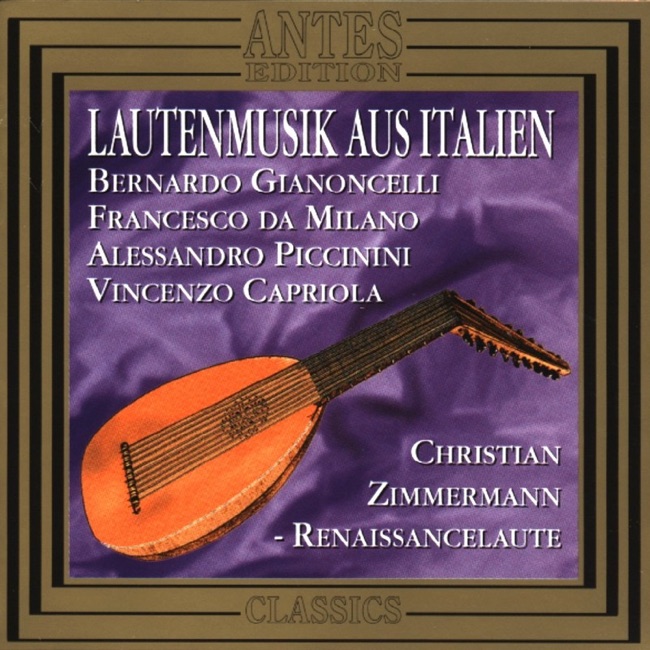
Vincenzo Capirola
Che farala (after Bartolomeo Tromboncino)
Works Info
Composer:Vincenzo CapirolaGenre:ChamberStyle:Chamber MusicAverage_duration:1:20"Che farala (after Bartolomeo Tromboncino)" is a composition by Vincenzo Capirola, an Italian composer and lutenist of the Renaissance era. The piece was composed in the early 16th century and is believed to have premiered in Italy during this time. The composition is a lute solo and is divided into three movements. The first movement is marked "Allegro" and is characterized by its lively and upbeat tempo. The second movement is marked "Adagio" and is slower and more contemplative in nature. The final movement is marked "Allegro" and returns to the lively and upbeat tempo of the first movement. The piece is based on a popular song by Bartolomeo Tromboncino, a prominent Italian composer of the early Renaissance. Capirola's composition is a variation on Tromboncino's original melody, with added embellishments and variations that showcase the virtuosic capabilities of the lute. One of the defining characteristics of Capirola's composition is its use of intricate ornamentation and improvisation. The lute was a popular instrument during the Renaissance era, and composers often wrote pieces that allowed for improvisation and embellishment by the performer. "Che farala (after Bartolomeo Tromboncino)" is no exception, with Capirola's original composition leaving ample room for the performer to add their own flourishes and variations. Overall, "Che farala (after Bartolomeo Tromboncino)" is a lively and virtuosic piece that showcases the technical capabilities of the lute. Its use of improvisation and ornamentation is characteristic of the Renaissance era, and its popularity as a solo lute piece has endured to this day.More....
Works Music
Released Music
1
1:11