Tomaso Albinoni
Concerto, for solo violin, violin, viola, cello & continuo in G major
Released Album
Recent Album
-
-
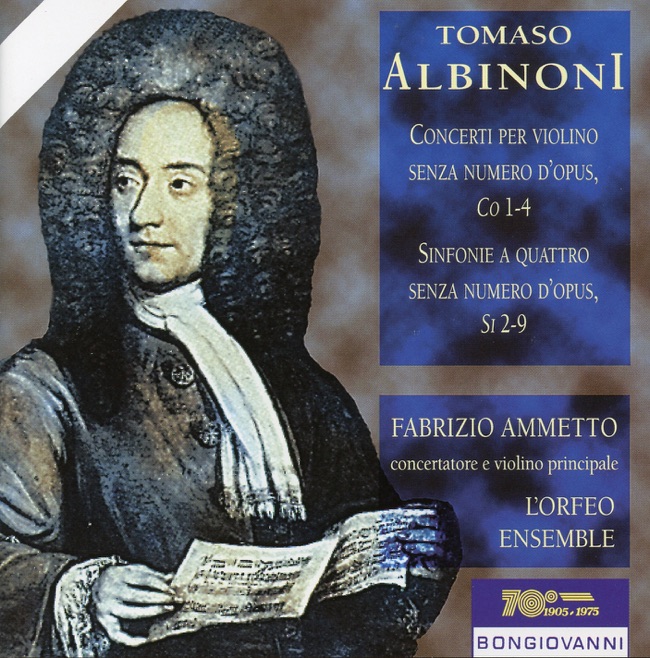 Fabrizio Ammetto / L'Orfeo Ensemble di SpoletoSeptember 25, 2001
Works Info
Composer:Tomaso AlbinoniGenre:ConcertoStyle:ConcertoCompose Date:1717Average_duration:7:38Movement_count:3Movement ....Tomaso Albinoni's Concerto for solo violin, violin, viola, cello & continuo in G major, also known as Op. 7 No. 2, was composed in the early 18th century. The exact date of composition is unknown, but it is believed to have been written between 1705 and 1715. The concerto was first premiered in Venice, Italy, where Albinoni was based. The concerto consists of three movements: Allegro, Adagio, and Allegro. The first movement, Allegro, is characterized by its lively and energetic tempo, with the solo violin leading the way. The second movement, Adagio, is a slow and melancholic piece, with the solo violin taking on a more expressive and emotional role. The final movement, Allegro, returns to the lively and energetic tempo of the first movement, with all instruments coming together in a joyful and celebratory finale. One of the key characteristics of Albinoni's concerto is its use of the solo violin as the primary instrument. The solo violin is given ample opportunity to showcase its technical prowess and virtuosity throughout the concerto, particularly in the first and third movements. The other instruments, including the violin, viola, cello, and continuo, provide a rich and supportive accompaniment to the solo violin, adding depth and texture to the overall sound. Overall, Albinoni's Concerto for solo violin, violin, viola, cello & continuo in G major is a masterful example of Baroque music, showcasing the technical skill and emotional depth of the composer and the performers. Its enduring popularity and continued performance today are a testament to its timeless appeal and enduring beauty.More....
Works Music