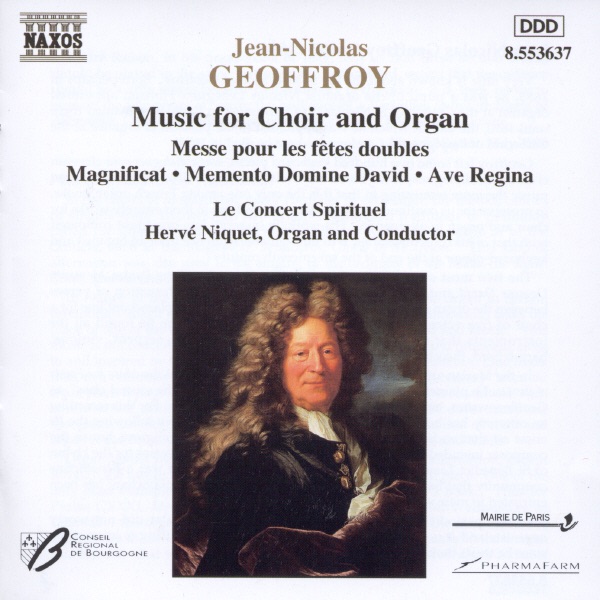
Jean-Nicholas Geoffroy
Magnificat
Released Album
Recent Album
Works Info
Composer:Jean-Nicholas GeoffroyGenre:ChoralStyle:MagnificatAverage_duration:7:49Jean-Nicholas Geoffroy's Magnificat is a choral work that was composed in the Baroque era. It was first premiered in 1699 at the Sainte-Chapelle in Paris, France. The Magnificat is a musical setting of the biblical text of the same name, which is a hymn of praise to the Virgin Mary. The work is divided into several movements, each of which has its own unique characteristics. The first movement of the Magnificat is a grand opening chorus that sets the tone for the entire work. It is characterized by its use of multiple vocal parts, including soprano, alto, tenor, and bass. The movement is marked by its lively tempo and intricate harmonies, which create a sense of joy and celebration. The second movement is a solo aria for the alto voice. It is a more introspective and contemplative piece, characterized by its slower tempo and more subdued harmonies. The aria is marked by its use of ornamentation and melodic embellishment, which add to its emotional depth. The third movement is a duet for soprano and bass voices. It is a lively and energetic piece, characterized by its use of rapid-fire vocal lines and intricate harmonies. The duet is marked by its sense of playfulness and joy, which make it a highlight of the work. The fourth movement is a solo aria for the soprano voice. It is a more contemplative and introspective piece, characterized by its use of slower tempos and more subdued harmonies. The aria is marked by its use of ornamentation and melodic embellishment, which add to its emotional depth. The fifth movement is a grand chorus that brings the work to a close. It is characterized by its use of multiple vocal parts, including soprano, alto, tenor, and bass. The movement is marked by its lively tempo and intricate harmonies, which create a sense of joy and celebration. Overall, Jean-Nicholas Geoffroy's Magnificat is a masterful work of Baroque choral music. Its use of multiple vocal parts, intricate harmonies, and lively tempos make it a joyous and celebratory piece that is still beloved by audiences today.More....
Works Music