Various Composers
Dans nos bois (J.-B. Lully) / L'amant le plus fidèle (J. Hotteterre)
Released Album
Recent Album
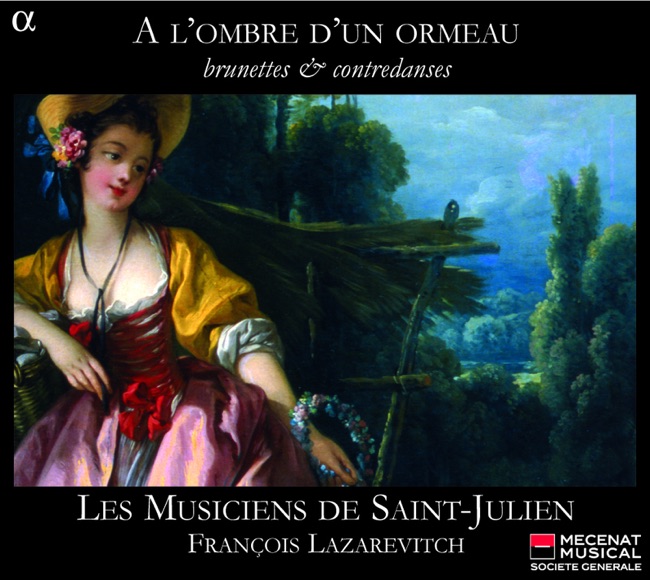
Works Info
Composer:Various ComposersGenre:VocalStyle:Vocal MusicAverage_duration:3:10"Dans nos bois" is a Baroque-era composition that was composed by Jean-Baptiste Lully, a French composer, and premiered in 1672. The piece is a part of the opera "Atys," which was written by Philippe Quinault. "Dans nos bois" is a pastoral scene that takes place in a forest, and it is sung by the character Sangaride, who is a nymph. The piece is divided into three movements. The first movement is a recitative, which is a type of singing that is closer to speaking than to singing. In this movement, Sangaride describes the beauty of the forest and the animals that live there. The second movement is an aria, which is a solo piece that is sung by Sangaride. In this movement, she sings about the joy that she feels when she is in the forest. The third movement is a chorus, which is sung by a group of nymphs. In this movement, they sing about the beauty of the forest and the happiness that it brings. The characteristics of "Dans nos bois" are typical of Baroque-era music. The piece is characterized by its use of ornamentation, which is the addition of extra notes or flourishes to a melody. The piece also features a basso continuo, which is a type of accompaniment that is played by a harpsichord or a similar instrument. The basso continuo provides a harmonic foundation for the melody. "L'amant le plus fidèle" is a Baroque-era composition that was composed by Jacques Hotteterre, a French composer, and premiered in the early 18th century. The piece is a part of a collection of pieces that were written for the flute. The piece is divided into three movements. The first movement is a prelude, which is an introductory piece that sets the mood for the rest of the piece. The second movement is an allemande, which is a type of dance that was popular in the Baroque era. In this movement, the flute plays a melody that is accompanied by a basso continuo. The third movement is a gigue, which is another type of dance that was popular in the Baroque era. In this movement, the flute plays a lively melody that is accompanied by a basso continuo. The characteristics of "L'amant le plus fidèle" are also typical of Baroque-era music. The piece features a basso continuo, which provides a harmonic foundation for the melody. The piece also features ornamentation, which adds extra notes or flourishes to the melody. The piece is also characterized by its use of dance rhythms, which were popular in the Baroque era. Overall, "Dans nos bois" and "L'amant le plus fidèle" are both examples of Baroque-era music. They feature typical characteristics of the era, such as ornamentation, basso continuo, and dance rhythms.More....
Works Music