Francesco Bartolomeo Conti
Lontananza dell'amato
Released Album
Recent Album
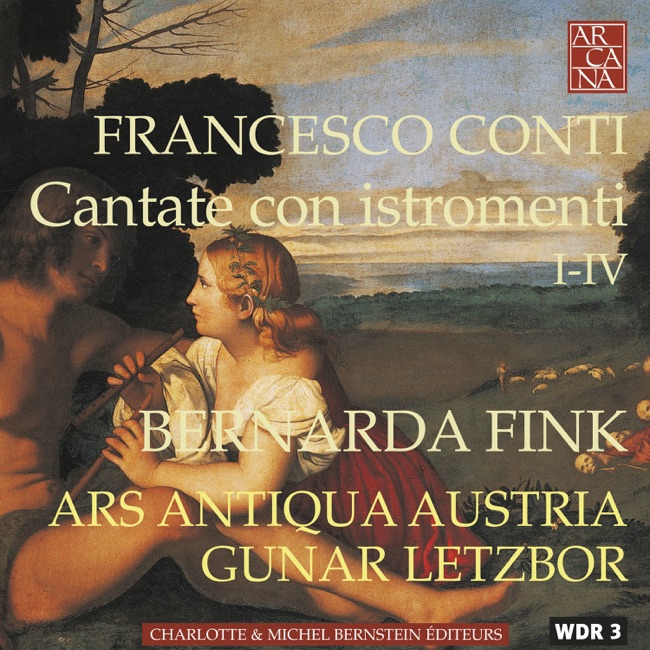
Works Info
Composer:Francesco Bartolomeo ContiGenre:ChoralStyle:ChoralAverage_duration:17:25Movement_count:5Movement ....Francesco Bartolomeo Conti was an Italian composer of the Baroque era, born in Florence in 1681. He was a prolific composer of operas, oratorios, and cantatas, and his works were performed in many cities across Europe. One of his most famous works is the cantata "Lontananza dell'amato," which was composed in the early 18th century. The cantata "Lontananza dell'amato" is a vocal work for soprano, strings, and continuo. It consists of three movements, each of which expresses a different emotion related to the theme of separation from a loved one. The first movement is a recitative, in which the soprano laments the absence of her beloved. The second movement is an aria, in which the soprano expresses her longing for her beloved and her hope that they will be reunited. The third movement is another recitative, in which the soprano reflects on the pain of separation and the uncertainty of the future. The cantata was composed in the early 18th century, and it premiered in Florence in 1706. It was performed by a soprano soloist, accompanied by a small ensemble of strings and continuo. The work was well-received by audiences and critics, and it became one of Conti's most popular compositions. The characteristics of "Lontananza dell'amato" reflect the style of the Baroque era. The work is characterized by its expressive melodies, ornate vocal lines, and rich harmonies. The use of recitative and aria form is typical of Baroque vocal music, and the work showcases Conti's skill in writing for the voice. The work also features a prominent role for the strings, which provide a lush and expressive accompaniment to the soprano's singing. Overall, "Lontananza dell'amato" is a beautiful and poignant work that captures the emotions of separation and longing. Its expressive melodies and rich harmonies make it a masterpiece of Baroque vocal music, and it remains a beloved work of the repertoire to this day.More....