Philippe Boesmans
Wintermärchen
Released Album
Recent Album
Works Info
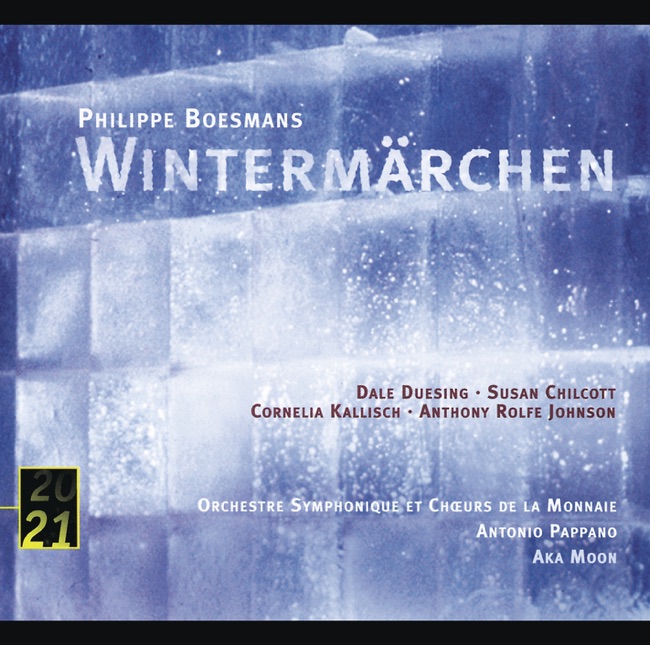
Composer:Philippe BoesmansGenre:OperaStyle:OperaCompose Date:1999Average_duration:117:58Wintermärchen is an opera composed by Philippe Boesmans, with a libretto by Luc Bondy and Marie-Louise Bischofberger. The opera was composed in 1999 and premiered on 19 May 2001 at the Théâtre Royal de la Monnaie in Brussels, Belgium. The plot of Wintermärchen is based on Shakespeare's play The Winter's Tale. The story revolves around the King of Sicilia, Leontes, who becomes convinced that his wife, Hermione, is having an affair with his best friend, Polixenes, the King of Bohemia. Leontes orders Polixenes to be killed and imprisons Hermione, who later dies of grief. Leontes is then cursed by the Oracle of Delphi and his son, Mamillius, dies. The second half of the play takes place sixteen years later, when Leontes is reunited with his daughter, Perdita, who was abandoned as a baby and raised by a shepherd. Perdita falls in love with Polixenes' son, Florizel, and the play ends with Leontes being forgiven and reunited with his family. Boesmans' opera follows the same basic plot as Shakespeare's play, but with some changes to the characters and setting. The opera is divided into two acts, with the first act taking place in Sicilia and the second act in Bohemia. The music is characterized by Boesmans' use of dissonant harmonies and complex rhythms, which reflect the emotional turmoil of the characters. Wintermärchen is divided into 14 movements, with each movement corresponding to a scene in the play. The first movement, "Prologue", sets the scene and introduces the characters. The second movement, "The King's Jealousy", introduces Leontes and his suspicion of Hermione and Polixenes. The third movement, "The Queen's Defense", features Hermione's defense of her innocence. The fourth movement, "The King's Accusation", sees Leontes accusing Hermione of adultery. The fifth movement, "The Queen's Imprisonment", features Hermione being taken away to prison. The second act begins with the sixth movement, "The Shepherd's Son", which introduces Perdita and the shepherd who raised her. The seventh movement, "The King's Remorse", sees Leontes regretting his actions and seeking forgiveness. The eighth movement, "The Oracle's Curse", features the Oracle of Delphi cursing Leontes. The ninth movement, "The Queen's Death", sees Hermione dying of grief. The tenth movement, "The King's Sorrow", features Leontes mourning the loss of his wife and son. The eleventh movement, "The Shepherd's Festival", takes place in Bohemia and features Perdita and Florizel falling in love. The twelfth movement, "The King's Anger", sees Polixenes becoming angry at his son's choice of bride. The thirteenth movement, "The King's Forgiveness", features Leontes being forgiven by Polixenes and reunited with his family. The final movement, "Epilogue", brings the opera to a close. Overall, Wintermärchen is a complex and emotionally charged opera that explores themes of jealousy, forgiveness, and redemption. Boesmans' music is challenging but rewarding, and the opera is a powerful adaptation of Shakespeare's play.More....