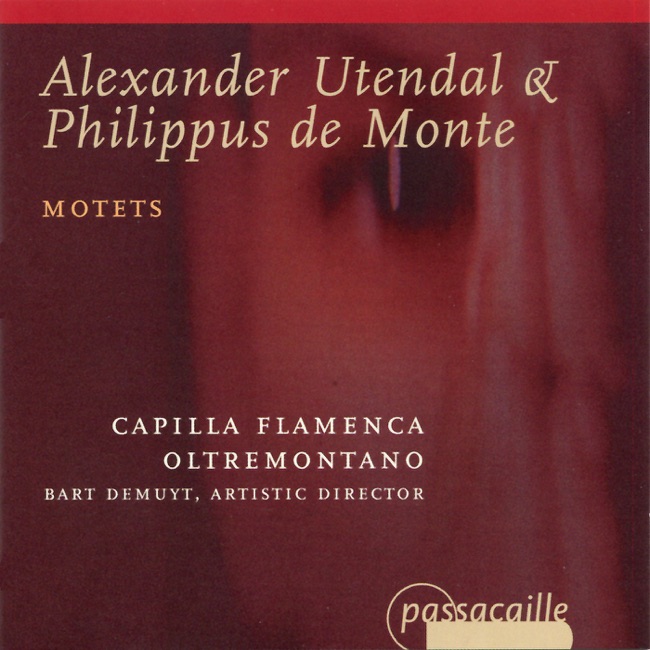
Alexander Utendal
Mors tua, mors Christi
Released Album
Recent Album
Works Info
Composer:Alexander UtendalGenre:ChoralStyle:MotetAverage_duration:4:43"Mors tua, mors Christi" is a sacred motet composed by Alexander Utendal, a Flemish composer of the Renaissance era. The piece was composed in the late 16th century, around 1590, and was likely written for performance in a church setting. The motet is written for four voices, with the text taken from the New Testament passage 1 Corinthians 15:55, which reads "O death, where is thy sting? O grave, where is thy victory?" The text is a meditation on the power of death and the ultimate triumph of Christ over death through his resurrection. The piece is divided into three movements, each with its own distinct character. The first movement is marked "Adagio" and is characterized by a mournful, contemplative mood. The voices sing in close harmony, with a sense of longing and sadness. The second movement is marked "Allegro" and is more lively and energetic. The voices sing in a more contrapuntal style, with each voice weaving in and out of the texture. The mood is more triumphant and joyful, reflecting the text's emphasis on Christ's victory over death. The final movement is marked "Adagio" and returns to the mournful mood of the first movement. The voices sing in a more homophonic style, with the text repeated several times in a chant-like manner. The piece ends on a quiet, contemplative note, with the voices fading away into silence. Overall, "Mors tua, mors Christi" is a beautiful example of Renaissance sacred music, with its intricate harmonies, contrapuntal textures, and expressive use of text painting. It is a testament to Utendal's skill as a composer and his ability to capture the emotional depth of religious texts through music.More....
Works Music