Heitor Villa-Lobos
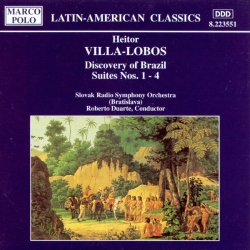
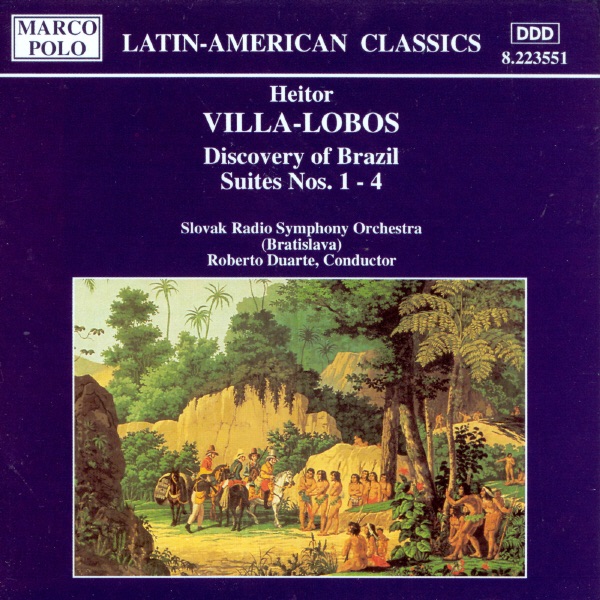
Descombrimento do Brasil: Suite No. 2 (3), A. 378
Released Album
Recent Album

Works Info
Composer:Heitor Villa-LobosGenre:OrchestralStyle:OrchestralCompose Date:1937Average_duration:12:50Movement_count:3Movement ....Heitor Villa-Lobos was a Brazilian composer who is known for his unique style of music that blends traditional Brazilian folk music with modern classical music. One of his most famous works is the "Descombrimento do Brasil: Suite No. 2 (3), A. 378," which was composed in 1937. The "Descombrimento do Brasil: Suite No. 2 (3), A. 378" is a three-movement suite that was inspired by the discovery of Brazil by the Portuguese in 1500. The suite was composed for orchestra and features a variety of instruments, including strings, woodwinds, brass, and percussion. The first movement of the suite is titled "Embolada," which is a fast-paced dance that is commonly found in Brazilian folk music. The movement features a lively rhythm and a melody that is played by the strings and woodwinds. The percussion section also plays an important role in this movement, providing a driving beat that propels the music forward. The second movement of the suite is titled "Xangô," which is a reference to an African deity that is commonly worshipped in Brazil. This movement is slower and more contemplative than the first movement, featuring a haunting melody that is played by the strings. The woodwinds and brass also play an important role in this movement, providing a rich and complex harmonic texture. The final movement of the suite is titled "Lundu," which is a dance that originated in Angola and was brought to Brazil by African slaves. This movement is fast-paced and features a lively rhythm that is played by the percussion section. The melody is played by the strings and woodwinds, and the brass section provides a powerful and dramatic climax to the piece. Overall, the "Descombrimento do Brasil: Suite No. 2 (3), A. 378" is a powerful and evocative work that showcases Villa-Lobos' unique style of music. The suite premiered in 1937 and has since become one of the most famous works in the classical music repertoire.More....
Works Music
Released Music