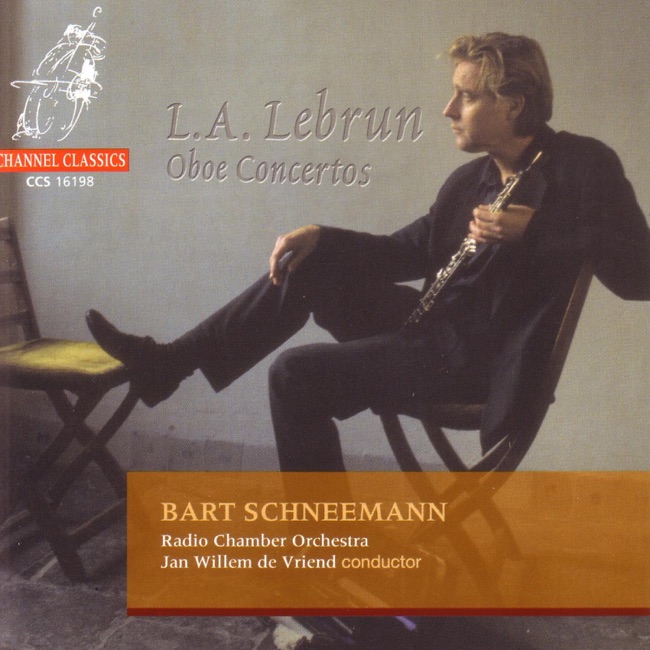
Ludwig August Lebrun
Concerto for oboe & orchestra, No. 2 in G minor
Released Album
Recent Album
Works Info
Composer:Ludwig August LebrunGenre:ConcertoStyle:ConcertoAverage_duration:19:39Movement_count:3Movement ....Ludwig August Lebrun's Concerto for oboe & orchestra, No. 2 in G minor, was composed in the late 18th century. The exact date of composition is unknown, but it is believed to have been written between 1775 and 1785. The concerto was premiered in Paris, France, where Lebrun was a prominent oboist in the court of Louis XVI. The concerto is divided into three movements: Allegro moderato, Adagio, and Rondo. The first movement, Allegro moderato, is in sonata form and begins with a dramatic orchestral introduction. The oboe enters with a lyrical melody that is developed throughout the movement. The second movement, Adagio, is a slow and expressive aria-like piece that showcases the oboe's ability to sing and sustain long phrases. The final movement, Rondo, is a lively and playful dance that features a recurring theme that is passed between the oboe and the orchestra. Lebrun's Concerto for oboe & orchestra, No. 2 in G minor, is characterized by its virtuosic writing for the oboe and its elegant and refined style. The concerto is a testament to Lebrun's skill as an oboist and his ability to write music that showcases the instrument's unique qualities. The concerto is also notable for its use of orchestral color and its balance between the soloist and the orchestra. Overall, Lebrun's Concerto for oboe & orchestra, No. 2 in G minor, is a significant work in the oboe repertoire and a testament to the composer's skill as both a performer and a composer. Its enduring popularity is a testament to its timeless beauty and its ability to captivate audiences with its expressive melodies and virtuosic writing.More....
Works Music
Released Music