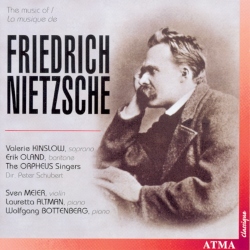
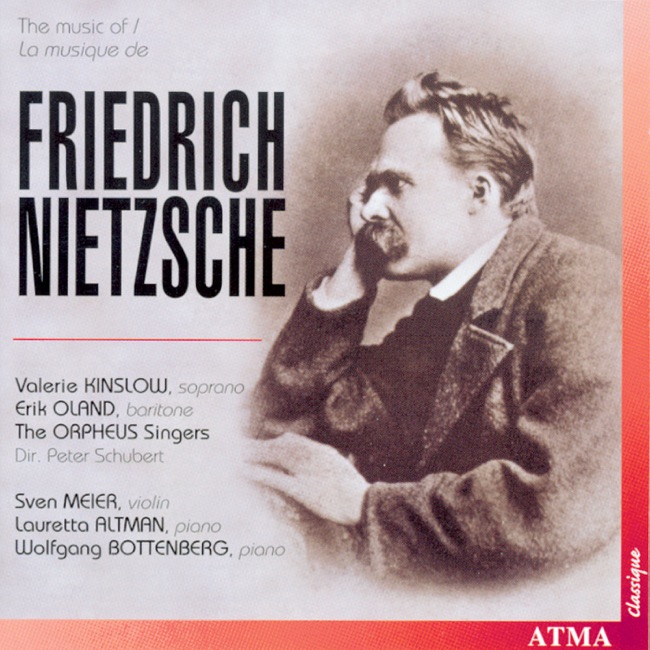
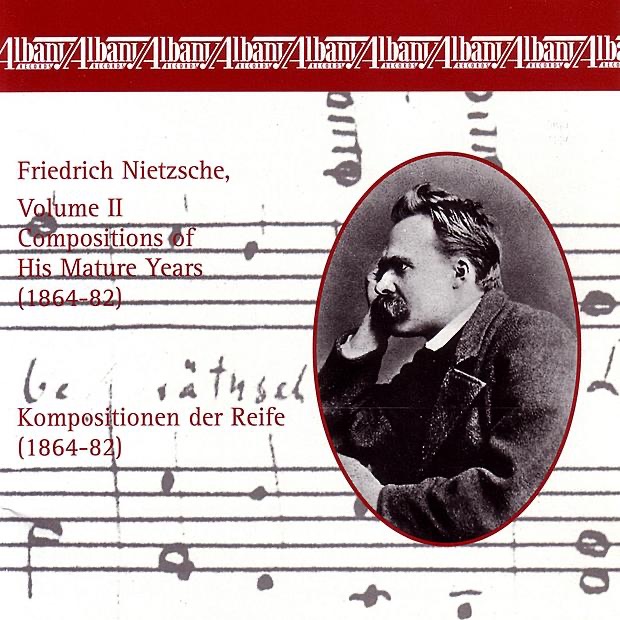
Friedrich Nietzsche
Kirchengeschichtliches Responsorium
Released Album
Recent Album
Works Info
Composer:Friedrich NietzscheGenre:VocalStyle:Vocal MusicCompose Date:1871Average_duration:2:39Friedrich Nietzsche's Kirchengeschichtliches Responsorium, also known as "Church-Historical Responsory," is a choral work composed in 1864. The piece premiered in the same year in Naumburg, Germany, during a church service. The composition consists of three movements, each with its own distinct characteristics. The first movement, "Gott ist tot" ("God is dead"), is a powerful and dramatic piece that features a full choir and organ. The text is taken from Nietzsche's famous philosophical statement, which suggests that the concept of God has lost its relevance in modern society. The music reflects the intensity of this idea, with dissonant harmonies and a driving rhythm that builds to a climactic finish. The second movement, "Christus ist geboren" ("Christ is born"), is a stark contrast to the first. It is a gentle and peaceful piece that features a solo soprano voice accompanied by a simple organ melody. The text is a traditional Christmas hymn, and the music reflects the joy and wonder of the holiday season. The final movement, "Halleluja" ("Hallelujah"), is a triumphant and celebratory piece that features the full choir and organ. The text is a traditional hymn of praise, and the music reflects the exultant mood of the words. The harmonies are rich and full, and the rhythm is lively and energetic. Overall, Kirchengeschichtliches Responsorium is a powerful and thought-provoking work that reflects Nietzsche's complex philosophical ideas. The music is challenging and innovative, with a range of textures and moods that reflect the different themes of the text. Despite its controversial subject matter, the piece has become a staple of the choral repertoire and continues to be performed and studied today.More....
Works Music