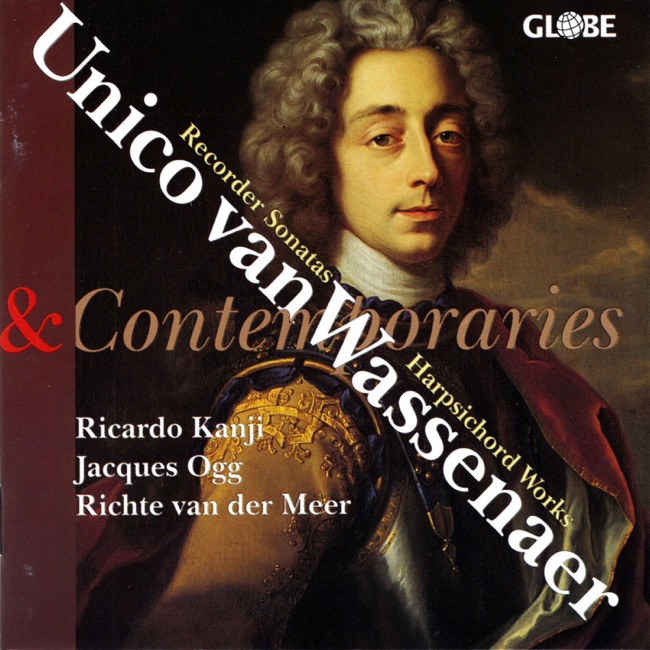
Count Unico-Wilhelm Van Wassenaer
Sonata Terza for recorder & continuo in G minor
Released Album
Recent Album
Works Info
Composer:Count Unico-Wilhelm Van WassenaerGenre:ChamberStyle:Chamber MusicCompose Date:1714Average_duration:9:31Movement_count:4Movement ....The 'Sonata Terza for recorder & continuo in G minor' is a Baroque composition by Count Unico-Wilhelm Van Wassenaer. The exact date of composition is unknown, but it is believed to have been written in the early 18th century. The piece consists of three movements: Largo, Allegro, and Adagio. The first movement, Largo, is a slow and expressive piece that showcases the recorder's ability to produce a rich and mellow sound. The recorder is accompanied by a simple and repetitive bass line played by the continuo, which consists of a harpsichord and a cello. The movement is characterized by its use of ornamentation, such as trills and turns, which add to the overall beauty of the piece. The second movement, Allegro, is a lively and energetic piece that features a fast and intricate melody played by the recorder. The continuo provides a steady and driving rhythm that propels the piece forward. The movement is characterized by its use of counterpoint, where the recorder and continuo play different melodies that complement each other. The final movement, Adagio, is a slow and melancholic piece that showcases the recorder's ability to produce a haunting and mournful sound. The recorder is accompanied by a simple and sparse bass line played by the continuo. The movement is characterized by its use of chromaticism, where the melody moves in half-steps, creating a sense of tension and unease. Overall, the 'Sonata Terza for recorder & continuo in G minor' is a beautiful and expressive piece that showcases the recorder's versatility and range. It is a testament to Count Unico-Wilhelm Van Wassenaer's skill as a composer and his ability to create music that is both technically challenging and emotionally moving.More....
Works Music