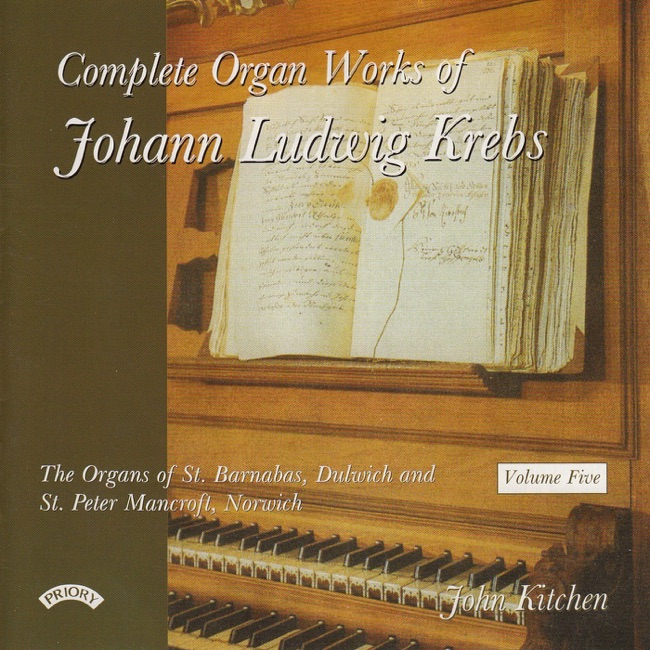
Johann Ludwig Krebs
Trio for organ in C major (Allegro)
Released Album
Recent Album
Works Info
Composer:Johann Ludwig KrebsGenre:KeyboardStyle:KeyboardAverage_duration:2:51Johann Ludwig Krebs was a German composer and organist who lived from 1713 to 1780. He was a student of Johann Sebastian Bach and worked as an organist in various churches throughout his career. One of his most famous works is the Trio for organ in C major (Allegro), which was composed in the mid-18th century. The Trio for organ in C major (Allegro) is a three-movement work for organ. It was composed in the Baroque style, which was characterized by elaborate ornamentation, complex counterpoint, and a focus on harmony and melody. The piece is written for a single organist who plays on a three-manual organ. The first movement of the Trio for organ in C major (Allegro) is marked Allegro and is in a fast tempo. It is written in sonata form, which is a musical structure that consists of three main sections: the exposition, development, and recapitulation. The exposition introduces the main themes of the piece, which are then developed and transformed in the development section. The recapitulation brings back the main themes in their original form. The second movement of the Trio for organ in C major (Allegro) is marked Adagio and is in a slow tempo. It is a lyrical and expressive movement that features a beautiful melody played on the organ's solo stop. The movement is in a simple ABA form, with the middle section providing a contrast to the outer sections. The third movement of the Trio for organ in C major (Allegro) is marked Allegro and is in a fast tempo. It is a lively and energetic movement that features a virtuosic organ part. The movement is in a binary form, with two contrasting sections that are repeated. Overall, the Trio for organ in C major (Allegro) is a beautiful and well-crafted work that showcases Krebs' skill as a composer and organist. Its Baroque style and complex musical structure make it a challenging piece to perform, but also a rewarding one for both the performer and the listener. The piece premiered in the mid-18th century and has since become a staple of the organ repertoire.More....
Works Music