


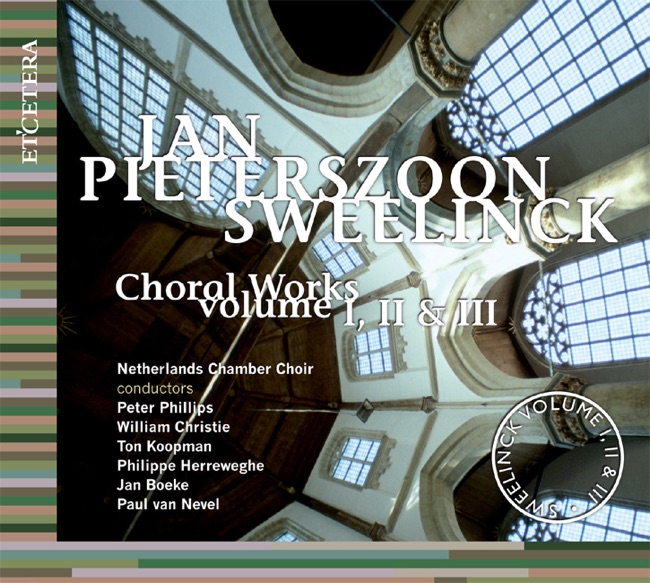
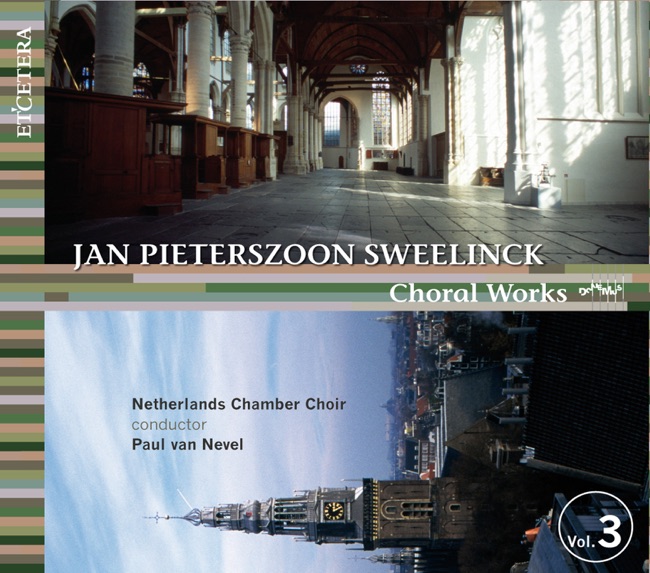
Jan Pieterszoon Sweelinck
Dolcissimo ben mio, speme di questo core (after Andrea Gabrieli)
Released Album
Recent Album

Works Info
Composer:Jan Pieterszoon SweelinckGenre:VocalStyle:Vocal MusicPublication Date:1612Average_duration:3:15Jan Pieterszoon Sweelinck was a Dutch composer and organist of the late Renaissance and early Baroque periods. He was born in Deventer, Netherlands, in 1562 and died in Amsterdam in 1621. Sweelinck was one of the most important composers of his time, and his music had a significant influence on the development of Baroque music. One of Sweelinck's most famous works is "Dolcissimo ben mio, speme di questo core (after Andrea Gabrieli)." This piece is a setting of a madrigal by Andrea Gabrieli, an Italian composer of the late Renaissance. Sweelinck's version of the madrigal is for five voices and is written in the style of the Venetian polychoral tradition. The composition of "Dolcissimo ben mio, speme di questo core" is not precisely known, but it is believed to have been written in the early 17th century. The piece was likely composed for a special occasion, such as a wedding or a coronation. The premiere of "Dolcissimo ben mio, speme di questo core" is also unknown, but it was likely performed in a church or a palace. The piece was likely performed by a choir of singers and accompanied by an organ or other instruments. The piece is divided into three movements, each of which has its own distinct character. The first movement is slow and expressive, with the voices weaving in and out of each other in a complex polyphonic texture. The second movement is faster and more rhythmic, with the voices imitating each other in a lively dance-like pattern. The third movement is slower and more contemplative, with the voices coming together in a rich and harmonious texture. The characteristics of "Dolcissimo ben mio, speme di questo core" are typical of Sweelinck's style. The piece is characterized by its complex polyphonic texture, with the voices weaving in and out of each other in a rich and intricate pattern. The piece also features Sweelinck's use of chromaticism, which adds a sense of tension and drama to the music. Overall, "Dolcissimo ben mio, speme di questo core" is a beautiful and expressive piece of music that showcases Sweelinck's mastery of the polyphonic style. Its rich harmonies and intricate textures make it a masterpiece of the late Renaissance and early Baroque periods.More....
Works Music
Released Music
2
3:11
3

3:40