Andrea Gabrieli
Intonatione del settimo tono
Released Album
Recent Album
Featured Album
Works Info
Composer:Andrea GabrieliGenre:KeyboardStyle:KeyboardPublication Date:1593Average_duration:1:14Andrea Gabrieli was a prominent Italian composer of the Renaissance period, known for his contributions to the development of polychoral music. One of his most famous works is the "Intonatione del settimo tono," a piece for eight voices that showcases his mastery of counterpoint and harmonic complexity. The "Intonatione del settimo tono" was composed in the late 16th century, likely around 1587-1588. It was written for the Basilica di San Marco in Venice, where Gabrieli served as the principal organist and composer. The piece was likely intended for use during the liturgy, as it follows the structure of a typical intonation for the Mass. The "Intonatione del settimo tono" is divided into three movements, each of which explores a different aspect of Gabrieli's compositional style. The first movement is a short, homophonic section that serves as an introduction to the piece. The second movement is the main section of the work, featuring intricate polyphony and rich harmonies. The third movement is a brief coda that brings the piece to a close. One of the most striking characteristics of the "Intonatione del settimo tono" is its use of polychoral techniques. Gabrieli divides the eight voices into two choirs, each with its own distinct musical material. The choirs are often used in antiphonal fashion, with one choir responding to the other in a call-and-response style. This creates a sense of spatial depth and grandeur that was characteristic of Venetian music of the time. Another notable feature of the piece is its use of chromaticism. Gabrieli employs a wide range of chromatic harmonies and melodic lines, creating a sense of tension and release that is both dramatic and expressive. This use of chromaticism was a hallmark of Gabrieli's style and would go on to influence later composers such as Bach and Handel. Overall, the "Intonatione del settimo tono" is a masterful example of Gabrieli's compositional skill and his contributions to the development of polychoral music. Its intricate polyphony, rich harmonies, and use of chromaticism make it a timeless masterpiece of the Renaissance period.More....
Works Music
Released Music
1
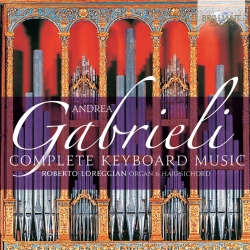
Intonation of the settimo tono
Intonationi d'organo: Libro primo: Intonazione del settimo tono
1:40
4
1:16
5
1:16
Featured Music