


Mark Armanini
Released Album
Concerto
-
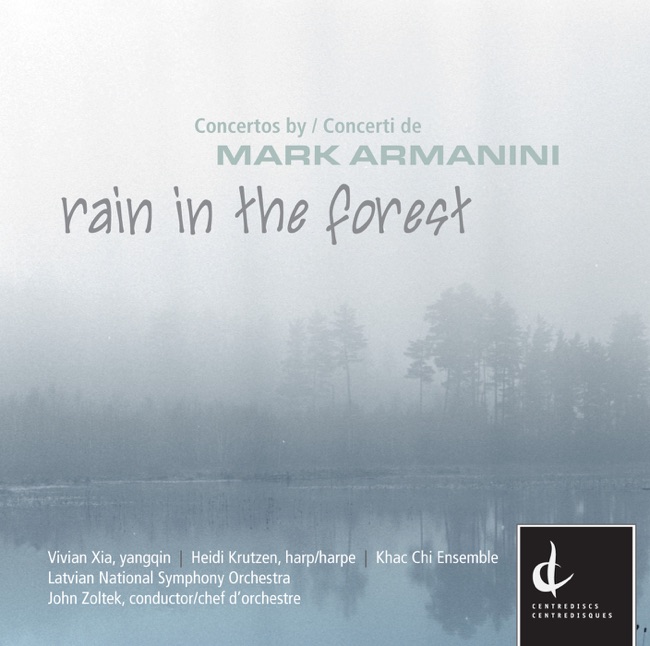 November 1, 2009
Choral
-
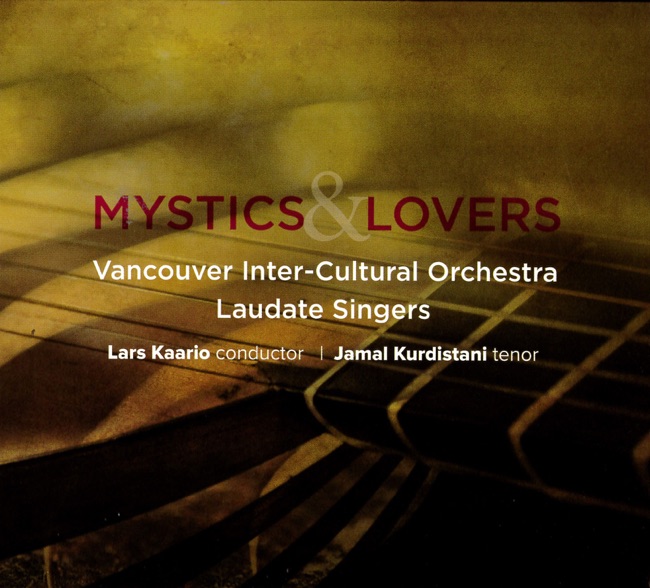 January 20, 2017
Artist Info
Role:Composer ConductorCountry: CanadaMark Armanini was a Canadian composer born on May 22, 1965, in Vancouver, British Columbia. He grew up in a family of musicians, with his father being a jazz pianist and his mother a classical pianist. Armanini began playing the piano at the age of four and showed a natural talent for music. He later studied composition at the University of British Columbia, where he earned a Bachelor of Music degree in 1988. Armanini's early compositions were heavily influenced by the works of Bach, Mozart, and Beethoven. He was particularly drawn to the complexity and precision of Bach's music, and he often incorporated elements of counterpoint and fugue into his own compositions. Armanini's early works were also characterized by their use of traditional forms, such as sonatas and symphonies. In the early 1990s, Armanini began to experiment with more modern styles of music, including jazz and rock. He was particularly interested in the use of electronic instruments and synthesizers, which he incorporated into his compositions. Armanini's music during this period was marked by its use of unconventional harmonies and rhythms, as well as its incorporation of elements of improvisation. One of Armanini's most notable works from this period is his Symphony No. 1, which was composed in 1992. The symphony is a four-movement work that incorporates elements of jazz and rock music, as well as classical forms. The first movement, "Allegro con brio," is a fast-paced, energetic piece that features a driving rhythm and complex harmonies. The second movement, "Adagio," is a slow, mournful piece that features a haunting melody and lush orchestration. The third movement, "Scherzo," is a playful, lighthearted piece that features a syncopated rhythm and a catchy melody. The final movement, "Finale," is a triumphant, celebratory piece that features a soaring melody and a driving rhythm. In the late 1990s, Armanini began to focus more on chamber music, particularly string quartets. He was drawn to the intimacy and complexity of the genre, and he enjoyed the challenge of writing for a small ensemble. Armanini's string quartets from this period are characterized by their use of unconventional harmonies and rhythms, as well as their incorporation of elements of improvisation. One of Armanini's most notable works from this period is his String Quartet No. 1, which was composed in 1998. The quartet is a four-movement work that features a wide range of emotions and moods. The first movement, "Allegro," is a fast-paced, energetic piece that features a driving rhythm and complex harmonies. The second movement, "Adagio," is a slow, mournful piece that features a haunting melody and lush orchestration. The third movement, "Scherzo," is a playful, lighthearted piece that features a syncopated rhythm and a catchy melody. The final movement, "Finale," is a triumphant, celebratory piece that features a soaring melody and a driving rhythm. In the early 2000s, Armanini began to focus more on vocal music, particularly choral music. He was drawn to the power and expressiveness of the human voice, and he enjoyed the challenge of writing for a large ensemble. Armanini's choral music from this period is characterized by its use of unconventional harmonies and rhythms, as well as its incorporation of elements of improvisation. One of Armanini's most notable works from this period is his Requiem, which was composed in 2002.More....
Recent Artist Music
Copyright Ⓒ 2013 Davinci Finger. All rights reseved
Service Terms & Policy