


Aureliano Cattaneo
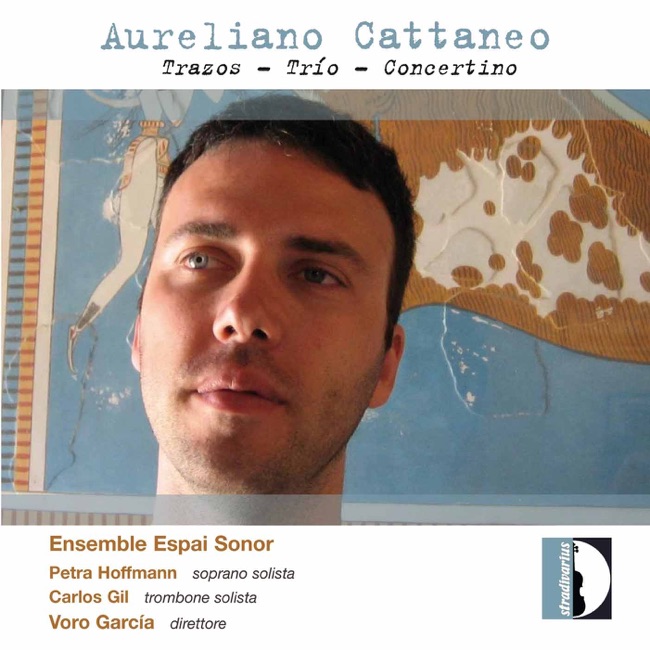
Artist Info
Role:ComposerBirth:1974Aureliano Cattaneo was a renowned Italian composer of classical music, born on January 1, 1914, in Milan, Italy. He was the youngest of three children born to a family of musicians. His father was a violinist, and his mother was a pianist. From a young age, Cattaneo showed a keen interest in music and began studying the piano and violin at the age of six. Cattaneo's musical talent was evident from an early age, and he quickly became a prodigy. He began composing music at the age of nine and gave his first public performance at the age of ten. He continued to study music throughout his childhood and adolescence, attending the Milan Conservatory, where he studied composition, piano, and conducting. Cattaneo's early compositions were heavily influenced by the works of the great Italian composers of the time, including Giuseppe Verdi and Giacomo Puccini. However, as he matured as a composer, he began to develop his own unique style, which was characterized by its emotional intensity and lyrical beauty. One of Cattaneo's most significant early works was his opera, "La Fiamma," which premiered in 1934. The opera was a critical and commercial success, and it established Cattaneo as one of the leading composers of his generation. The opera was notable for its lush orchestration, soaring melodies, and dramatic intensity. Throughout the 1930s and 1940s, Cattaneo continued to compose operas, as well as orchestral and chamber music. His works were performed throughout Italy and Europe, and he became known for his ability to create music that was both emotionally powerful and technically sophisticated. One of Cattaneo's most famous works is his "Concerto for Violin and Orchestra," which was composed in 1948. The concerto is a virtuosic showcase for the solo violinist, with its soaring melodies and intricate technical passages. The work has become a staple of the violin repertoire and is widely regarded as one of the greatest violin concertos of the 20th century. In the 1950s and 1960s, Cattaneo continued to compose music, but he also began to focus more on teaching and conducting. He taught composition at the Milan Conservatory and conducted orchestras throughout Italy and Europe. He also served as the director of the Milan Conservatory from 1965 to 1974. Despite his success as a composer, Cattaneo remained humble and dedicated to his craft. He was known for his meticulous attention to detail and his willingness to revise and refine his works until they were perfect. He was also deeply committed to the traditions of classical music and believed that music should be a reflection of the human experience. Cattaneo's later works were characterized by their simplicity and elegance. He eschewed the complex harmonies and dense textures of his earlier works in favor of a more straightforward and lyrical style. His music became more introspective and reflective, with a focus on melody and harmony. One of Cattaneo's most famous late works is his "String Quartet No. 3," which was composed in 1980. The quartet is a hauntingly beautiful work, with its spare textures and melancholy melodies. It is a testament to Cattaneo's ability to create music that is both emotionally powerful and intellectually stimulating. Cattaneo continued to compose music until his death in 2000 at the age of 86. He left behind a legacy of beautiful and emotionally powerful music that continues to inspire and move audiences today.More....
Recent Artist Music
Copyright Ⓒ 2013 Davinci Finger. All rights reseved
Service Terms & Policy