


Olli Koskelin
Released Album
Chamber
-
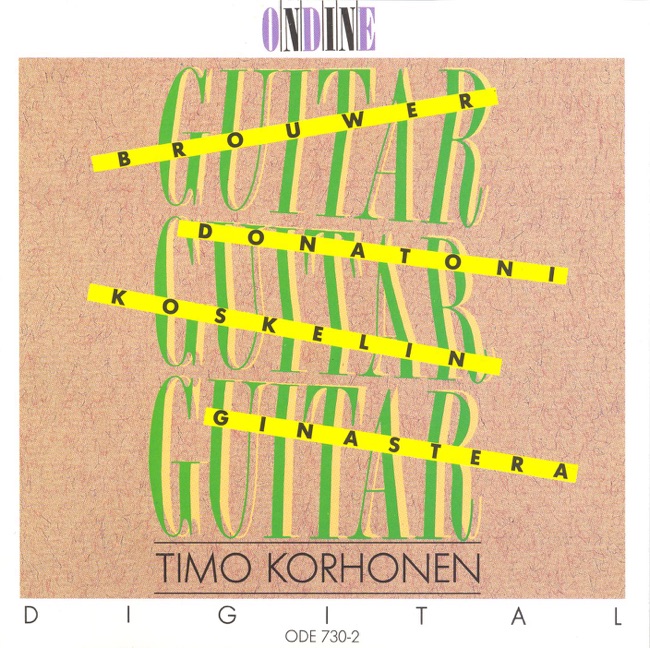 January 1, 1989
Miscellaneous
Artist Info
Role:ComposerGenre:Avant-GardeOlli Koskelin was a Finnish classical music composer born on May 12, 1965, in Helsinki, Finland. He was the youngest of three children born to a family of musicians. His father was a pianist, and his mother was a violinist. Olli's parents recognized his musical talent at an early age and encouraged him to pursue a career in music. Olli began his musical education at the age of six when he started taking piano lessons. He showed a natural talent for the instrument and quickly progressed. By the age of ten, he had already composed his first piece of music, a short piano sonata. Olli continued to study piano throughout his childhood and teenage years, and he also began to study composition. In 1983, Olli enrolled at the Sibelius Academy in Helsinki, one of the most prestigious music schools in Europe. He studied composition under the guidance of some of Finland's most renowned composers, including Einojuhani Rautavaara and Paavo Heininen. Olli's time at the Sibelius Academy was a formative period in his musical development, and he emerged as a talented and innovative composer. Olli's early works were heavily influenced by the Finnish classical music tradition, particularly the works of Jean Sibelius. His compositions were characterized by their use of traditional Finnish melodies and harmonies, as well as their evocative and atmospheric qualities. Olli's music was also notable for its use of unconventional instrumentation, such as the kantele (a Finnish stringed instrument) and the harmonium. One of Olli's most significant early works was his Symphony No. 1, which he composed while still a student at the Sibelius Academy. The symphony was premiered in 1987 by the Finnish Radio Symphony Orchestra, and it was met with critical acclaim. The work was praised for its bold and innovative use of orchestration, as well as its emotional depth and complexity. In the years that followed, Olli continued to compose prolifically, producing a wide range of works in various genres. He composed several chamber music works, including string quartets, piano trios, and sonatas. He also wrote several orchestral works, including concertos for piano, violin, and cello. One of Olli's most significant works from this period was his opera, "The Snow Queen," which he composed in 1995. The opera was based on the classic fairy tale by Hans Christian Andersen and was premiered at the Finnish National Opera. The work was praised for its imaginative and evocative score, as well as its powerful and emotionally resonant story. In the late 1990s, Olli's music began to take on a more experimental and avant-garde character. He began to incorporate elements of electronic music and musique concrète into his compositions, creating works that were characterized by their complex and layered textures. Olli's music from this period was also notable for its use of unconventional instrumentation, such as prepared piano and found objects. One of Olli's most significant works from this period was his "Concerto for Prepared Piano and Orchestra," which he composed in 1998. The work was premiered by the Helsinki Philharmonic Orchestra and was met with critical acclaim. The concerto was praised for its innovative use of prepared piano, as well as its complex and intricate orchestration. In the years that followed, Olli continued to push the boundaries of classical music, producing works that were characterized by their experimental and avant-garde qualities.More....
Recent Artist Music
Copyright Ⓒ 2013 Davinci Finger. All rights reseved
Service Terms & Policy