


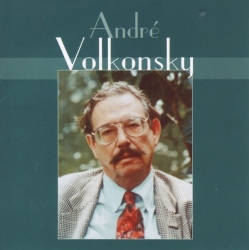
Andrei Volkonsky
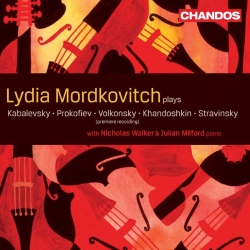
Released Album
Chamber
-

-
-
 March 1, 2005
 -
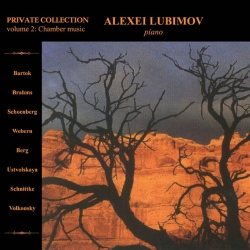
Keyboard
-
 January 17, 2020
Vocal
-
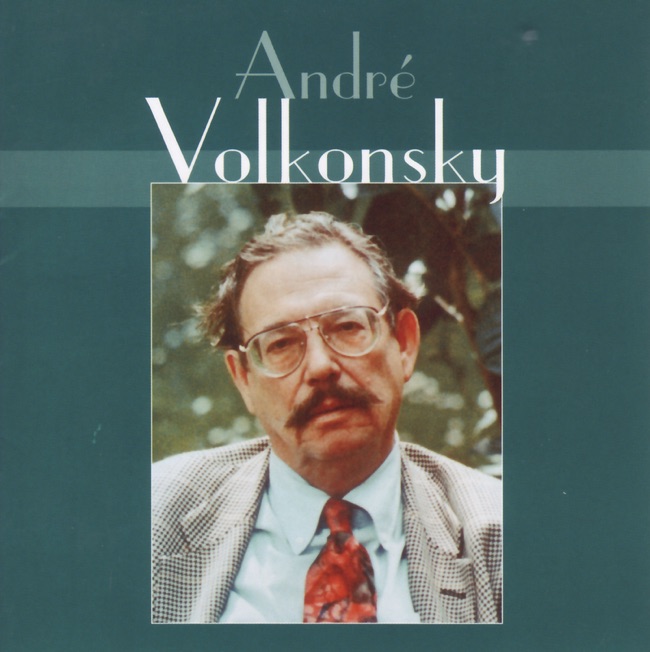 September 2, 2008
Artist Info
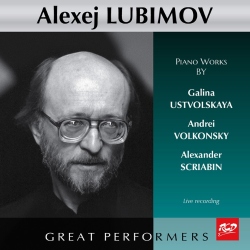
Role:ComposerDeath:September 16, 2008Andrei Volkonsky was a Russian composer who was born on December 15, 1933, in Saint Petersburg, Russia. He was born into a family of musicians, and his father, Sergei Volkonsky, was a composer and conductor. Andrei began his musical education at a young age, studying piano and composition with his father. In 1951, Volkonsky entered the Leningrad Conservatory, where he studied composition with Dmitri Shostakovich. He also studied piano with Maria Yudina, who was a close friend of Shostakovich. During his time at the conservatory, Volkonsky became interested in avant-garde music and began experimenting with new techniques and styles. After graduating from the conservatory in 1956, Volkonsky began working as a composer and conductor. He was a member of the Leningrad Composers' Union and was involved in the organization of new music festivals and concerts. He also worked as a music critic, writing articles for various publications. In the early 1960s, Volkonsky became interested in electronic music and began experimenting with tape recorders and synthesizers. He created a number of electronic compositions, including "Electronic Etudes" and "Electronic Symphony." In 1964, Volkonsky was invited to participate in the Darmstadt Summer Courses for New Music in Germany. There, he met a number of avant-garde composers, including Karlheinz Stockhausen and Pierre Boulez. He was particularly influenced by the work of Boulez and began incorporating serialism and other avant-garde techniques into his own compositions. Volkonsky's most famous work is his "Symphony of the Way," which he began composing in the late 1960s. The symphony is based on the Taoist philosophy of Lao Tzu and is divided into three parts: "The Way of Heaven," "The Way of Earth," and "The Way of Man." The work features a large orchestra, choir, and soloists, and incorporates electronic music and spoken word. The premiere of "Symphony of the Way" took place in Moscow in 1971 and was a great success. The work was praised for its innovative use of electronic music and its incorporation of Eastern philosophy. However, the Soviet authorities were not pleased with the work's avant-garde style and its references to Taoism, and Volkonsky was criticized for his "cosmopolitanism." In the years that followed, Volkonsky continued to compose and conduct, but he faced increasing pressure from the Soviet authorities. He was accused of "formalism" and was banned from performing his own works. In 1979, he emigrated to Italy, where he continued to compose and conduct. Volkonsky's later works include "The Book of the Dead," which is based on the ancient Egyptian text of the same name, and "The Song of Songs," which is based on the biblical book of the same name. He also composed a number of chamber works, including string quartets and sonatas for various instruments. Throughout his career, Volkonsky was known for his innovative use of electronic music and his incorporation of Eastern philosophy and mythology into his compositions. He was a pioneer of avant-garde music in Russia and was one of the first composers to experiment with electronic music in the country. His works continue to be performed and recorded today, and he is remembered as one of the most important Russian composers of the 20th century.More....
Recent Artist Music
1

4:8
5
4:9
6

4:9

Copyright Ⓒ 2013 Davinci Finger. All rights reseved
Service Terms & Policy