


Clifford Harker
Artist Info
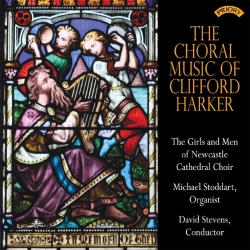
Role:ComposerBirth:February 5, 1912 in Newcastle Upon Tyne, EnglandDeath:November 2, 1999 in Bristol, Avon, EnglandGenre:ChoralClifford Harker was a British composer of classical music who lived from 1894 to 1956. He was born in London and showed an early interest in music, learning to play the piano and violin as a child. He went on to study at the Royal Academy of Music in London, where he was a pupil of Frederick Corder and Tobias Matthay. Harker's early compositions were influenced by the Romantic tradition, but he soon developed his own distinctive style. He was particularly interested in the use of harmony and counterpoint, and his music often featured complex textures and intricate rhythms. He also had a keen sense of melody, and many of his works are characterized by their lyrical beauty. One of Harker's most important early works was his Piano Sonata No. 1, which he composed in 1917. The piece is notable for its virtuosic piano writing and its use of complex harmonies and rhythms. It was well-received by critics and helped to establish Harker's reputation as a composer. In the 1920s, Harker began to experiment with new forms and styles. He was particularly interested in the music of the Second Viennese School, and he incorporated elements of atonality and serialism into his own compositions. He also began to explore the possibilities of electronic music, and he composed several works for tape and other electronic media. One of Harker's most important works from this period was his String Quartet No. 2, which he composed in 1925. The piece is notable for its use of atonal harmonies and its complex rhythmic structures. It was a departure from Harker's earlier, more Romantic style, and it helped to establish him as a leading figure in the avant-garde music scene. In the 1930s, Harker continued to explore new forms and styles. He was particularly interested in the music of the Baroque period, and he began to incorporate elements of Baroque music into his own compositions. He also continued to experiment with electronic music, and he composed several works for radio and other electronic media. One of Harker's most important works from this period was his Concerto for Piano and Orchestra, which he composed in 1938. The piece is notable for its virtuosic piano writing and its use of Baroque-inspired counterpoint. It was well-received by critics and helped to establish Harker as one of the leading composers of his generation. During World War II, Harker served in the British Army and was stationed in North Africa and Italy. He continued to compose during this time, and his music was often inspired by his experiences in the war. One of his most important works from this period was his Symphony No. 2, which he composed in 1943. The piece is notable for its powerful, dramatic themes and its use of military-inspired rhythms. After the war, Harker continued to compose and to experiment with new forms and styles. He was particularly interested in the music of the Far East, and he incorporated elements of Chinese and Japanese music into his own compositions. He also continued to explore the possibilities of electronic music, and he composed several works for film and other electronic media. One of Harker's most important works from this period was his Symphony No. 3, which he composed in 1950. The piece is notable for its use of Chinese-inspired melodies and its complex rhythmic structures. It was well-received by critics and helped to establish Harker as one of the leading composers of his generation.More....
Recent Artist Music
Copyright Ⓒ 2013 Davinci Finger. All rights reseved
Service Terms & Policy